
Procuring automotive glass components for commercial vehicle assembly, public transit fleets, and replacement markets requires strict adherence to international safety standards, precise compound curvature tooling, and tightly controlled ceramic frit printing. This sourcing guide outlines component categories, thermal tempering dynamics for curved automotive panels, dimensional checking fixture tolerances, and essential RFQ documentation needed for factory quotations.
Vehicle Glazing Categories: Side Windows, Backlights, and Sunroofs
Automotive glazing is divided into structural categories based on vehicle position and functional demands. While laminated glass is mandatory for front windshields to protect against projectile penetration, side door windows, rear quarter vents, and rear backlights are typically manufactured from single-sheet fully tempered safety glass.
Tempered automotive glass provides high mechanical strength to resist body torsion and aerodynamic buffeting at highway speeds. In the event of a severe collision or rollover, it fractures into small, blunt fragments to reduce passenger injury. To evaluate standard export specifications across our vehicle component portfolio, review our automotive glass hub.
AidinGlass specializes in flat and curved tempered safety glass components for passenger car side drop windows, commercial van side vents, bus passenger glazing, rear backlights, and fixed panoramic roof panels. Front laminated windshields requiring dedicated optical camera calibration zones and homologation certification are evaluated and quoted subject to verified buyer 3D CAD drawing submittals and tooling feasibility review.
Thermal Tempering Dynamics for Compound Curvature Components
Manufacturing curved automotive glass requires specialized gravity bending or advanced roll-forming furnaces. Heated flat float glass ribbons are elevated to approximately six hundred and fifty degrees Celsius until malleable, then formed over CNC-machined metal molds to match exact vehicle chassis geometry.
Immediately following forming, high-pressure air nozzles quench the glass surfaces to create balanced surface compression exceeding ninety-five megapascals. Achieving uniform temper across deep compound curvatures demands precise nozzle angling to avoid localized stress variations that cause optical distortion.
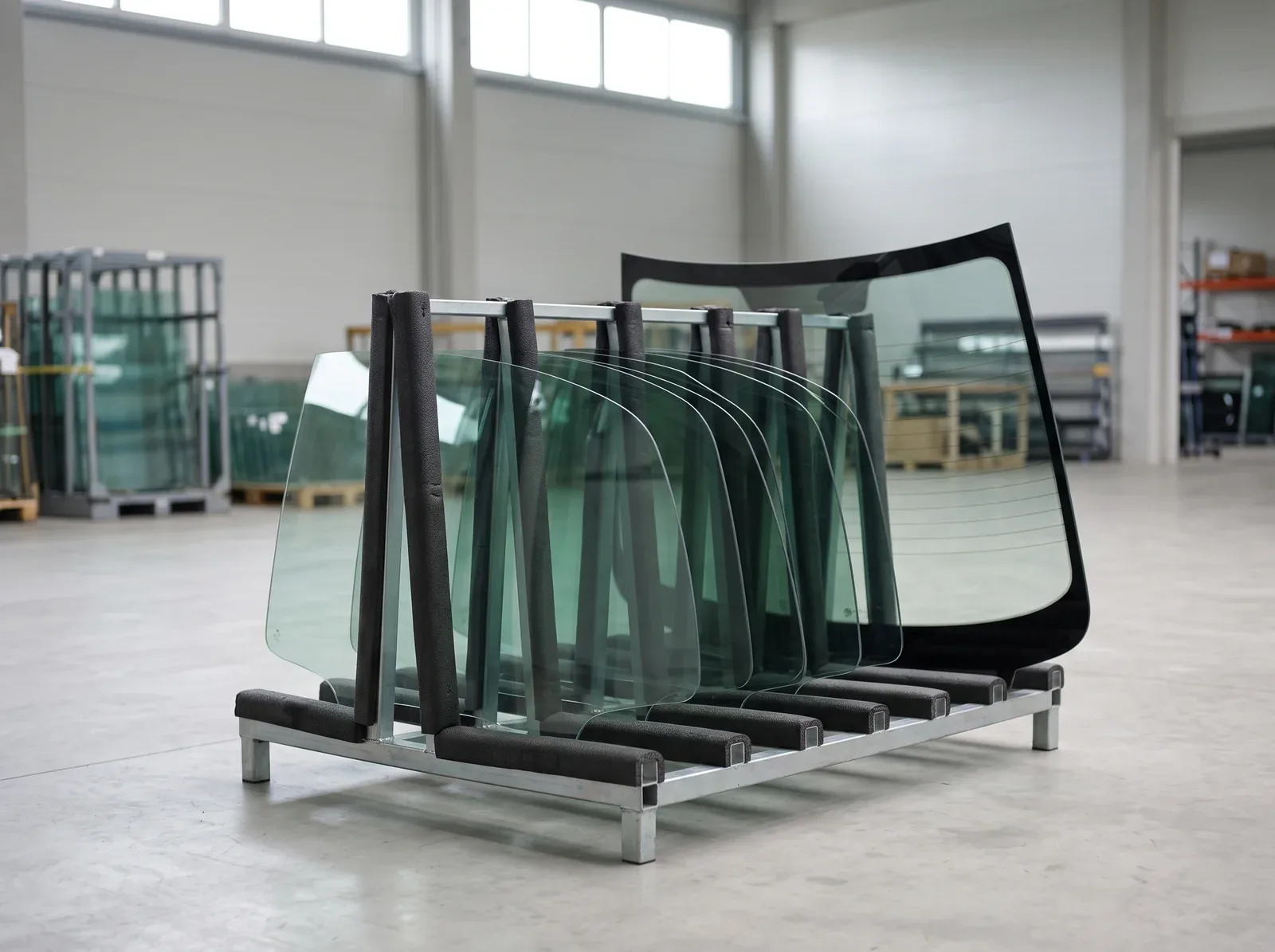
Ceramic Frit Band Printing, Demister Busbars, and Conductive Connectors
Virtually all modern vehicle glass features a black ceramic frit border printed along the perimeter. This ceramic enamel band is applied via precision screen-printing and permanently fired into the glass surface during the tempering cycle. The frit band shields underlying polyurethane bonding adhesives from ultraviolet degradation and conceals vehicle structural flanges.
For rear backlights, fine conductive silver-ceramic paste is screen-printed in horizontal lines across the interior glass face to form electric demister heating grids. Copper connection tabs or lead-free solder terminals are ultrasonically soldered to the busbar pads to connect seamlessly with the vehicle electrical harness.
Optical Distortion Testing and Regulatory Zones A and B
Automotive glazing regulations establish strict optical clarity thresholds across distinct functional zones of the glass. Zone A represents the primary direct visual field of the driver, where optical distortion and double imaging must be virtually zero to prevent visual fatigue and misjudgment of road distances.
Zone B encompasses secondary peripheral vision areas. Optical inspection is conducted using automated projection shadowgraph systems or standardized zebra reflection boards viewed at specified installation rake angles. Any optical waviness caused by roller contact or uneven cooling quench must remain within the strict limits defined by international vehicle safety glazing standards.
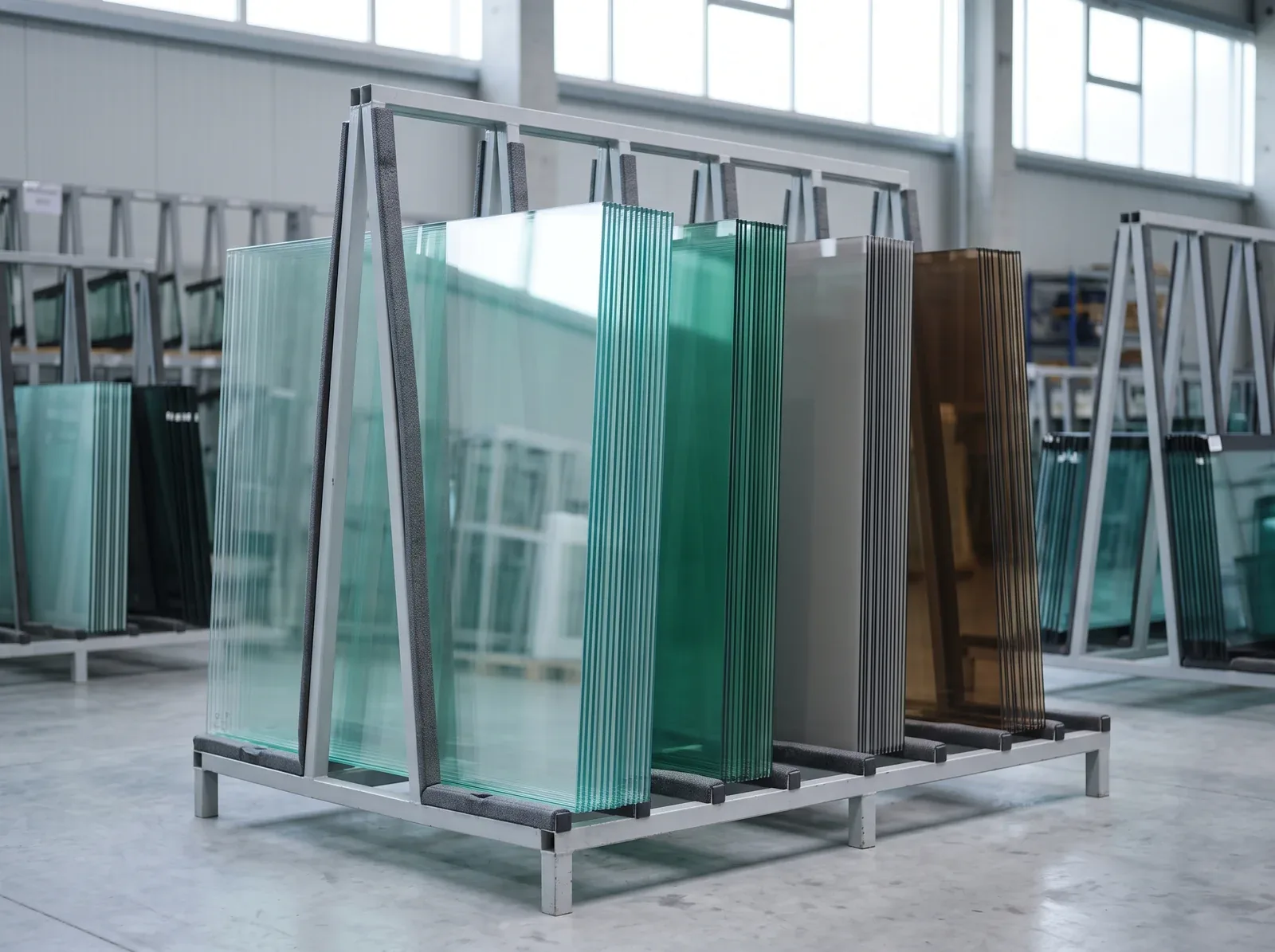
Dimensional Tolerances, CAD Datum Schemes, and Checking Fixtures
Automotive assembly lines operate under strict dimensional tolerances. Glass components must fit flush inside door guide channels and robotic adhesive glazing cells without manual adjustment.
| Standard Automotive Tolerance | Verification Method | |
|---|---|---|
| Perimeter Profile (Contour) | ±1.0mm to ±1.5mm | Full-perimeter CNC checking fixture with dial gauges |
| Surface Curvature (Sagitta) | ±1.0mm deviation from nominal CAD | Contact probe coordinate measuring machine (CMM) |
| Glass Thickness | ±0.2mm for monolithic tempered panes | Digital micrometer across eight measurement points |
| Hole and Notch Location | ±1.0mm from primary datum origin | Precision fixture gauge pins |
| Optical Distortion Zone A/B | Within international regulatory limits | Zebra board reflection / shadowgraph transmission test |
These tolerance ranges represent typical commercial automotive OEM checking fixture benchmarks under standard CAD datum coordinate schemes. Exact project tolerances must be mutually agreed on the buyer approved component drawing prior to tooling fabrication.
Homologation Markings, Traceability, and Safety Certification Requirements
Every individual automotive safety glass pane must feature a permanent, indelible regulatory trademark (monogram or bug) etched or ceramic-printed into an agreed corner. This marking identifies the glass manufacturer, the glass type (tempered or laminated), and official type-approval codes required by regional transport authorities (such as European E-mark designations or US DOT numbers).
For OEM supply contracts, comprehensive batch traceability records must be archived, documenting furnace thermal run profiles, ceramic ink lot numbers, and periodic break pattern fragmentation test logs (verifying a minimum of 40 to 400 granular fragments per 50x50mm test area) to satisfy automotive quality management systems.
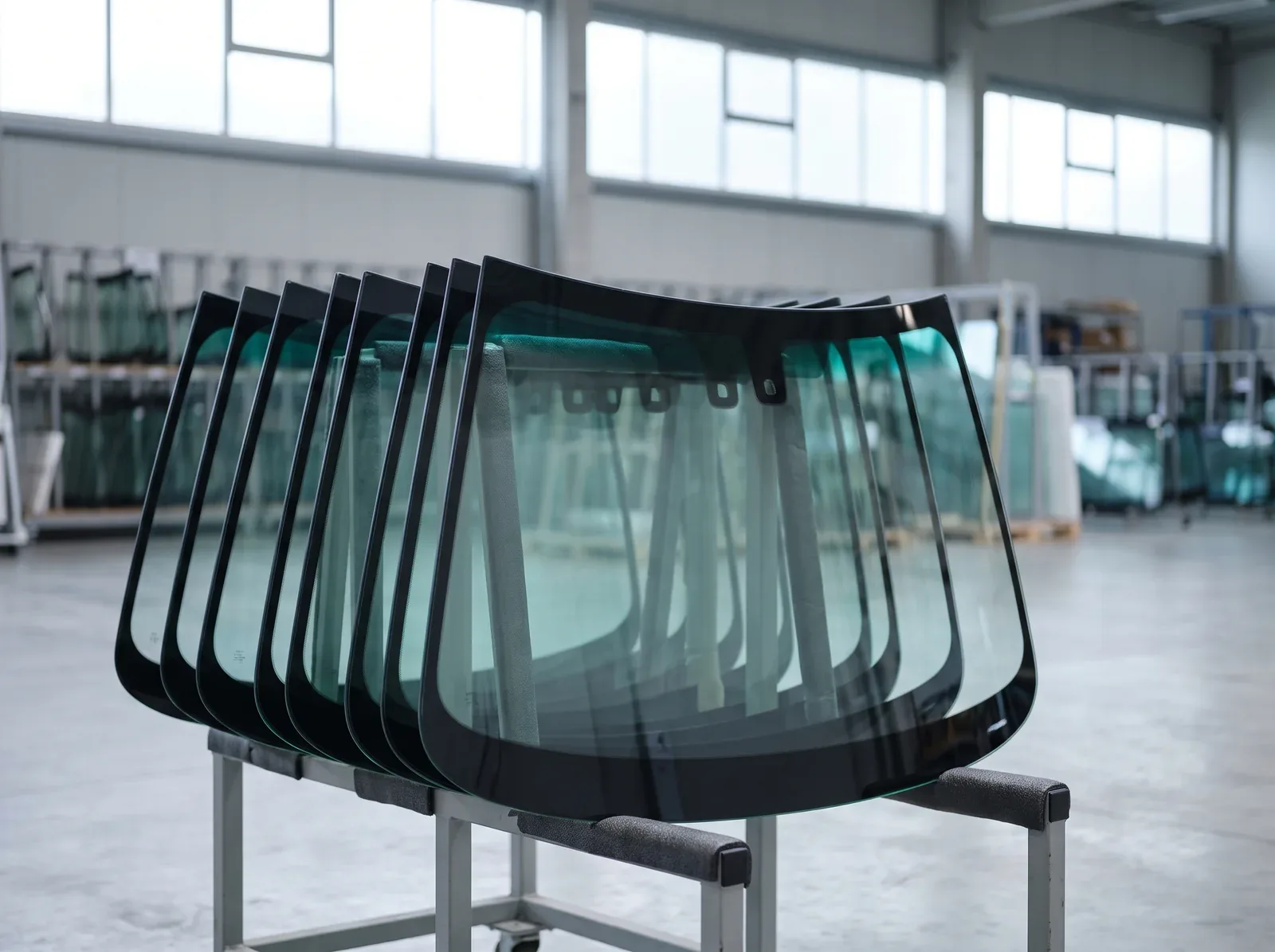
Curved Automotive Glass Tooling and Sagitta Measurement
Achieving consistent curvature across vehicle production runs requires dedicated CNC-machined forming molds and precision curvature checking templates. In automotive terminology, cross-curvature depth is quantified by the sagitta—the maximum perpendicular distance measured from a chord line connecting the glass edges to the deepest point of the curved arc.
Sagitta tolerances are verified on dedicated inspection fixtures fitted with digital dial indicators at designated grid points. Deviations exceeding ±1.0mm can cause binding in door window regulator channels or excessive wind noise along window perimeter seals at highway speeds.
Packaging for Long-Distance Transit: Wooden Crates and Metal Racks
Curved automotive glass is vulnerable to edge point-loading and vibration abrasions during international shipping. Finished panels are packed vertically into custom steel stillages or heavy-duty wooden crates lined with high-density EVA foam cushioning.
Each pane is separated by non-staining rubber spacers or specialized interleaving foam sheets to prevent glass-to-glass contact during sea freight transit.
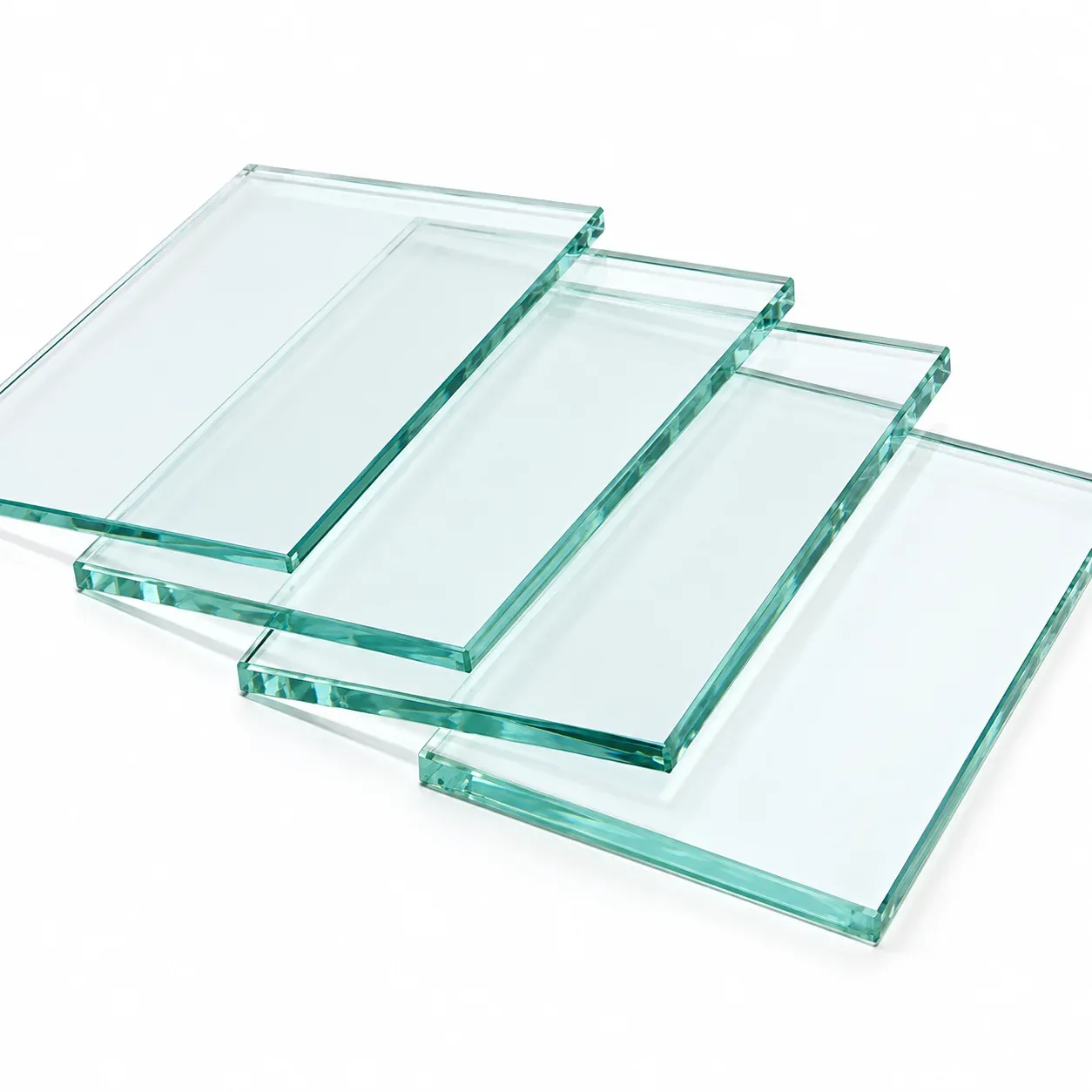
RFQ Submission Requirements: Drawings, Annual Volumes, and Quality Plans
To obtain an accurate quotation for vehicle glass components, procurement managers should supply complete technical drawings and production forecasts. Connect with our automotive engineering team by submitting your RFQ package via our RFQ portal.
- 3D CAD surface models (STEP or IGES format) alongside fully dimensioned 2D PDF drawings.
- Glass substrate specification: clear, green tinted, or privacy dark gray glass.
- Nominal thickness: typically 3.2mm, 3.5mm, 4.0mm, or 5.0mm for side and rear components.
- Ceramic frit artwork with dot-matrix gradient transition specifications.
- Demister electrical parameters: nominal resistance in ohms and operating voltage.
- Projected annual volume, batch batching schedule, and packaging requirements.
Frequently asked questions
Can tempered automotive glass be cut or trimmed to fit a custom vehicle frame?
No. Tempered automotive glass cannot be cut, drilled, or ground after manufacturing. Any attempt to alter the edge will trigger catastrophic relief of internal stress, shattering the entire component into small granules.
What is the purpose of the dot matrix pattern on automotive glass borders?
The dot matrix creates a smooth visual transition between the solid black ceramic border and the clear viewing area, while also preventing optical distortion during the furnace heating process by distributing heat evenly across the edge boundary.
What certifications are required for automotive glass components?
Automotive glazing must comply with recognized international vehicle safety regulations such as European and North American automotive safety glazing standards, with official homologation markings permanently etched onto each pane.
How are rear defogger grid terminals tested before export?
Every rear backlight undergoes electrical continuity and resistance testing on the production line, confirming that the printed heating circuit operates within specified wattage limits without hot spots or open circuits.
What is the standard glass thickness for vehicle side door windows?
Passenger cars typically utilize 3.2mm, 3.5mm, or 4.0mm tempered glass for side drop windows, balancing weight reduction with acoustic isolation and structural rigidity inside door seal channels.
Sources
- UN ECE Regulation No. 43: Uniform provisions concerning the approval of safety glazing materials — United Nations Economic Commission for Europe
- ISO 3537: Road vehicles — Safety glazing materials — Mechanical tests — International Organization for Standardization