
Procuring double and triple insulated glass units (IGUs) for commercial facades, window fabrication, and architectural projects requires meticulous coordination of glass pane types, spacer materials, dual-seal barriers, and gas cavity fills. An omission in secondary sealant specification or coating orientation can lead to premature seal failure, internal fogging, or compromised thermal performance. This comprehensive sourcing guide provides a step-by-step checklist for commercial IGU procurement.
Primary Barrier Architecture: Desiccated Aluminum vs Warm-Edge Spacers
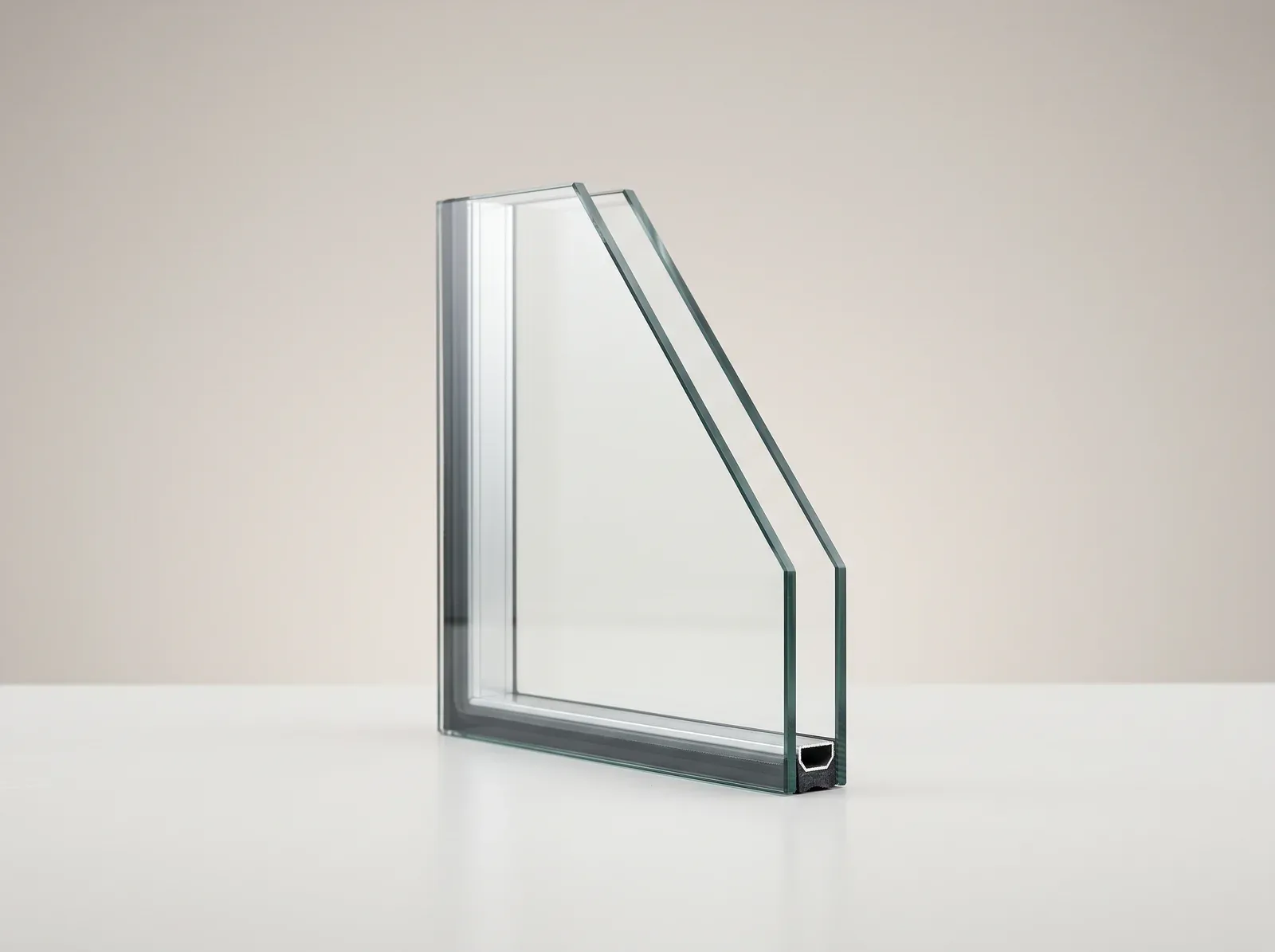
The perimeter spacer separates the individual glass panes and establishes the internal insulating cavity. Traditional IGUs utilize hollow extruded aluminum spacers filled with molecular sieve desiccant beads that absorb residual moisture inside the cavity. While structurally robust and economical, aluminum is highly conductive, creating a localized thermal bridge along window perimeters that promotes edge condensation.
Modern energy codes increasingly mandate warm-edge spacer systems. Fabricated from stainless steel composite profiles, structural silicone foam, or engineered polymers, warm-edge spacers reduce thermal edge conductance by up to seventy percent, elevating indoor glass perimeter temperatures and preventing winter condensation. Learn more on our dedicated insulated glass product hub.
Dual-Seal Integrity: Polyisobutylene Primary and Polyurethane Secondary
High-performance commercial IGUs rely on a robust dual-seal barrier system. The primary seal consists of continuous thermoplastic polyisobutylene (PIB) extruded along both sides of the spacer bar. PIB serves as an impermeable hermetic barrier that blocks water vapor ingress and prevents insulating gas leakage over the unit lifespan.
The secondary sealant is applied around the outer perimeter channel to provide structural bonding and elastic resistance against wind loading and thermal cycling. For standard four-sided captured framing systems, two-part polyurethane or polysulfide is standard. For structural silicone glazing (SSG) curtain walls with exposed edges, certified structural silicone sealant is strictly mandatory to resist UV degradation.
Gas Cavity Options: Dehydrated Air vs Argon Gas Concentration
The gas filling inside the sealed cavity governs convective and conductive heat transfer between panes. Standard economical units are filled with dry atmospheric air with a dew point below minus forty degrees Celsius to prevent interior condensation.
Upgrading the cavity fill to high-purity argon gas (typically minimum ninety percent concentration) reduces the overall center-of-glass U-value significantly. Argon is denser and has lower thermal conductivity than air, suppressing internal gas convection loops without altering visual light transmission.
Glazing Rebate Depth, Drainage, and Edge Clearance Engineering
Premature failure of insulated glass units is most frequently caused by improper window frame rebate design rather than manufacturing defects. If the window frame lacks adequate weep holes or proper edge drainage, rainwater and condensation collect in the rebate, submerging the secondary sealant in standing water.
Even high-grade secondary sealants degrade under continuous water immersion. Specifiers must ensure frames incorporate ventilated, drained rebates with dense neoprene or EPDM setting blocks positioned under the lower glass corners to elevate the IGU at least 5mm above the bottom frame channel.

Selecting Outer and Inner Panes: Tinted, Reflective, and Low-E Combinations
Optimizing an IGU requires pairing the appropriate glass substrates across the assembly faces.
| Glazing Component Role | Recommended Glass Types | |
|---|---|---|
| Surface 1 (Exterior Outward) | Weather protection and first visual plane | Clear float, low-iron float, or body-tinted glass |
| Surface 2 (Cavity Outward) | Solar radiation control before cavity penetration | Pyrolytic reflective or solar-control Low-E coating |
| Surface 3 (Cavity Inward) | Internal radiant heat retention (heating climates) | Thermal insulation Low-E coating |
| Surface 4 (Interior Inward) | Interior contact face and impact safety | Clear float, laminated safety glass, or tempered glass |
Internal Gas Concentration Testing and Quality Control Metrology
Verifying that argon gas has been effectively filled and sealed inside the unit is critical before factory dispatch. Quality assurance protocols utilize non-destructive high-frequency spark emission devices (such as spark gas analyzers) or optical sensor meters that measure internal plasma emission spectra through the glass without breaching the hermetic seal.
International insulating glass standards mandate that commercial argon-filled IGUs achieve an initial gas concentration of at least ninety percent (±2%), with an annual leakage rate of less than one percent per year. Units falling below eighty-five percent argon concentration fail factory quality acceptance and must be recycled.
Altitude Compensation, Capillary Tubes, and Deflection Control
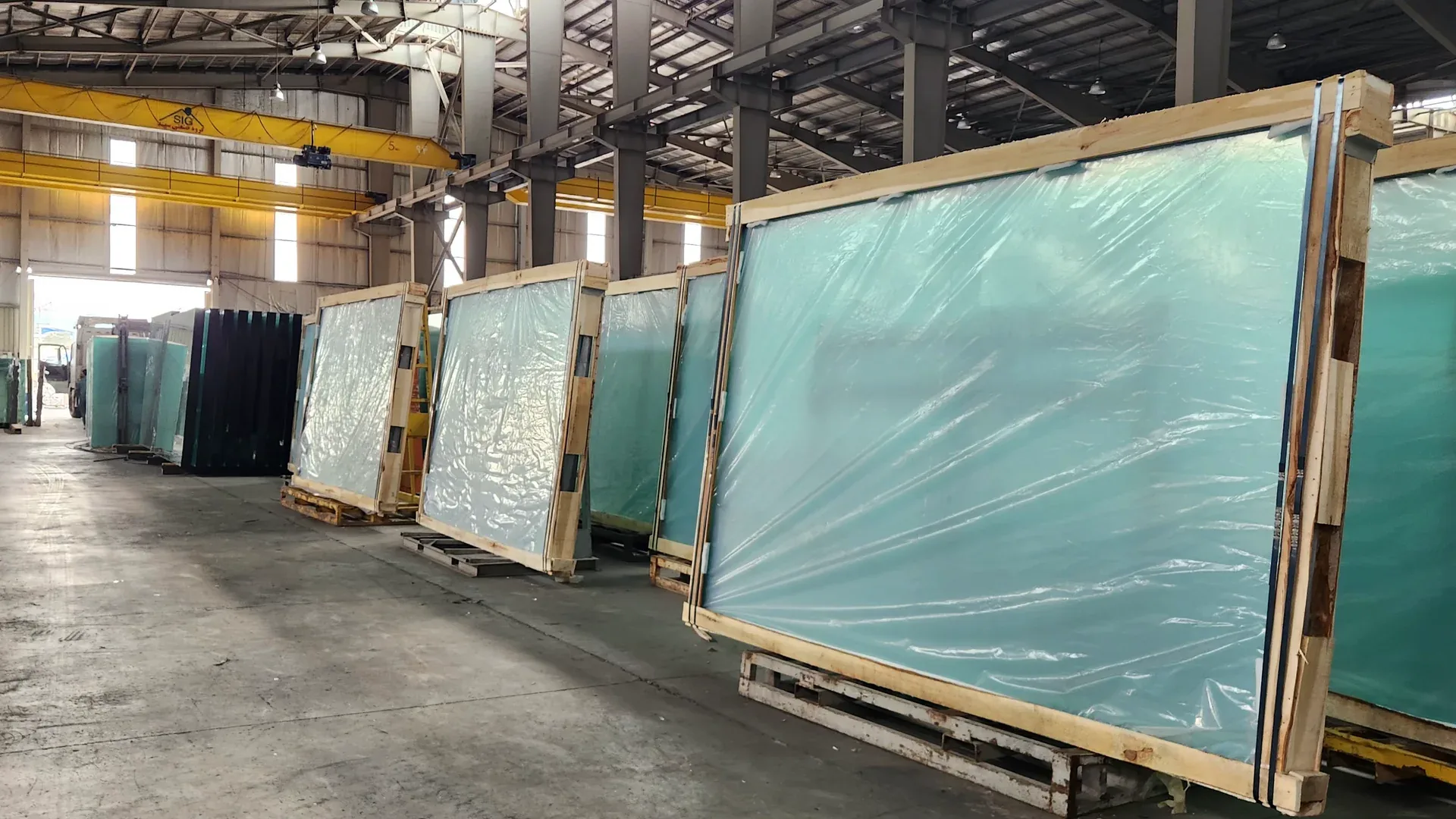
When IGUs are manufactured near sea level and transported across mountain passes or installed at high-altitude project sites, atmospheric pressure differentials create severe stress. Low external air pressure causes the internal cavity air to expand, bowing the panes outward into concave balloons that distort reflections and risk seal failure.
For shipments experiencing altitude elevation changes greater than eight hundred meters, factory-installed capillary breather tubes or balance valves must be specified. These stainless steel tubes allow internal and external pressures to equalize during transit and are crimped and sealed shut upon arrival at the final site elevation.
Procurement Checklist for Commercial Insulated Glass Shipments
Prior to placing an international order for insulated glass units, procurement teams should review our comprehensive ordering checklist to guarantee complete technical alignment. Submit your project requirements through our RFQ portal for immediate engineering evaluation.
- Exact makeup callout: e.g. 6mm Low-E Tempered + 12A Argon + 6mm Clear Tempered.
- Spacer specification: aluminum vs warm-edge composite with spacer width in millimeters.
- Secondary sealant chemistry: polyurethane/polysulfide (captured frames) vs silicone (SSG facades).
- Low-E coating placement: explicit designation of Surface 2 or Surface 3 orientation.
- Safety glazing compliance: verify fully tempered or laminated safety glass panes where required.
- Altitude compensation: identify transportation route elevations and request capillary tubes if needed.
Frequently asked questions
Why is structural silicone required for exposed-edge IGUs?
Standard polysulfide and polyurethane secondary sealants degrade rapidly when exposed to direct solar ultraviolet radiation. In structural silicone glazing where the glass edge is visible or structurally bonded, UV-stable structural silicone is mandatory to prevent seal failure.
How long does argon gas remain inside a quality insulated glass unit?
Quality dual-seal IGUs manufactured with polyisobutylene primary seals lose less than one percent of argon gas per year according to international standards, providing an effective gas-retention service life exceeding twenty to twenty-five years.
What causes permanent optical distortion in installed double glazing?
Optical distortion (the funhouse mirror effect) occurs when barometric pressure and temperature changes cause the sealed cavity to expand or contract, bowing the glass panes inward or outward relative to each other.
Can insulated glass units be cut down to size on the jobsite?
No. Cutting an assembled IGU punctures the sealed perimeter cavity, releasing the gas fill and allowing moisture to enter, which causes immediate internal fogging and total unit failure.
What is the purpose of desiccant inside the spacer bar?
The desiccant beads (typically 3A molecular sieve) adsorb residual airborne moisture trapped inside the cavity during factory assembly, lowering the internal dew point below -40°C to prevent internal condensation.
Sources
- EN 1279-1: Glass in building — Insulating glass units — Part 1: Generalities, dimensional tolerances and rules for the system description — European Committee for Standardization
- ASTM E2190: Standard Specification for Insulating Glass Unit Performance and Evaluation — ASTM International