
Secondary processing of silver mirrors requires specialized fabrication tooling, dedicated coolant management, and stringent edge sealing to prevent silver delamination and oxidation. Fabricators and quality control teams must understand the physical constraints of cutting, bevelling, and drilling mirrored glass. This comprehensive technical guide details optimal processing parameters, adhesive compatibility, and factory acceptance criteria for commercial shipments.
Precision Cutting and Edge Grinding Without Silver Layer Chipping
Cutting silver mirror glass demands precision cutting pressure and high-grade cutting wheels. Scoring must be executed cleanly with light, uniform wheel pressure. Excessive pressure micro-fractures the glass substrate along the score line, fracturing the thin silver layer and allowing ambient air to infiltrate beneath the backing paint.
Immediately following the breakout, edgework should be performed using diamond grinding wheels with abundant, continuous coolant flow. Grinding wheels must turn toward the glass face, not off the painted back, to prevent peeling or micro-chipping the protective backing. Explore our core mirror product offerings on our mirror hub.
Hole Drilling, Cut-Out Tolerances, and Stress Relief
Holes for electrical fixtures, stand-off mounts, and plumbing penetrations must be drilled using opposing twin-spindle diamond core drills. Drilling from both sides prevents breakout spalling on the rear painted surface. All drilled holes must be positioned at a distance from the sheet edge of at least twice the glass thickness.
Internal cut-outs for wall outlets or hinges require radiused internal corners of at least 6mm. Sharp ninety-degree internal corners concentrate mechanical and thermal stresses, causing spontaneous cracking during wall installation or transit.
CNC Cutting, Spindle Speeds, and Coolant pH Control
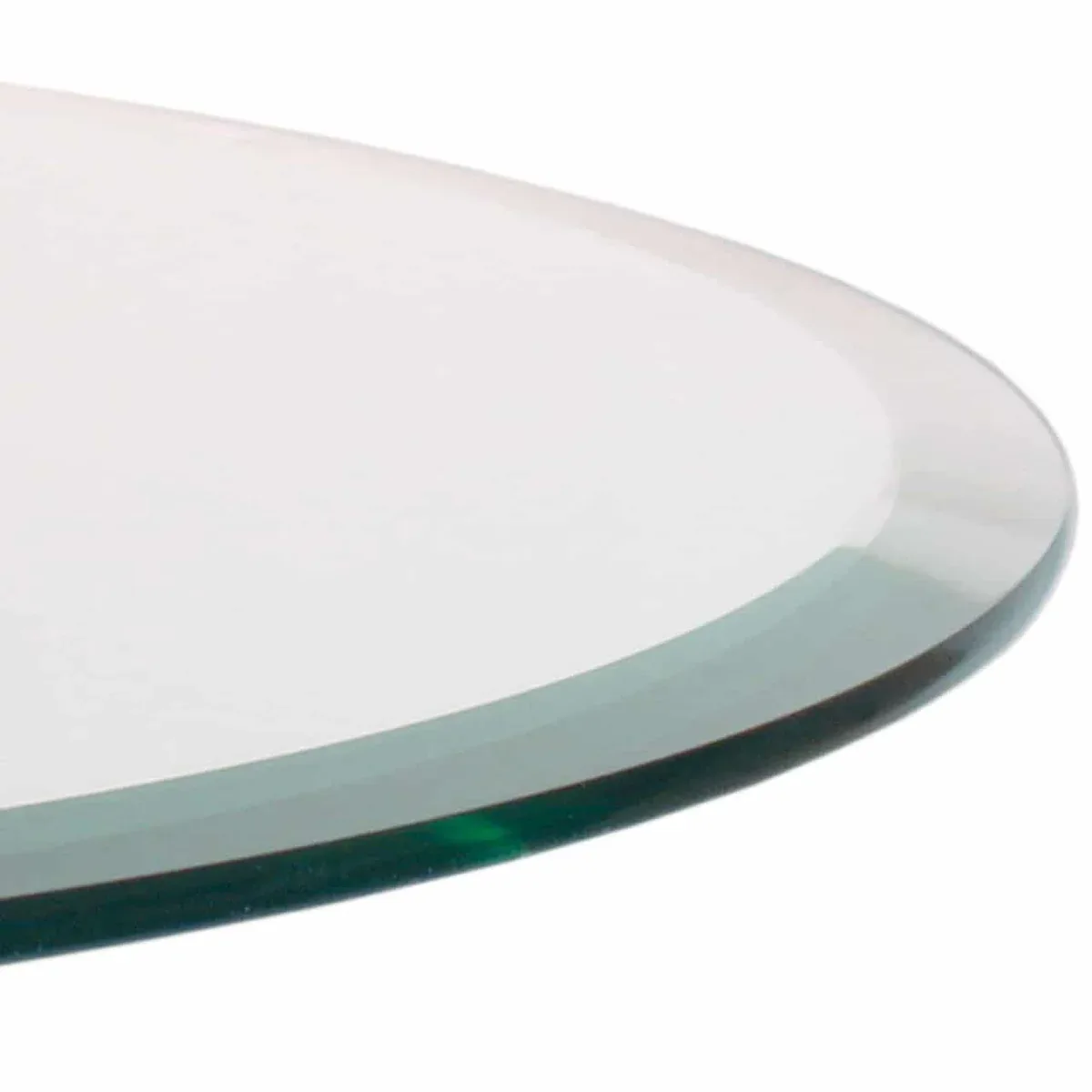
Automated CNC cutting and edging centers must be carefully calibrated for mirror processing. Spindle rotation speeds and diamond abrasive mesh selections (typically 120-mesh for primary roughing, transitioning to 240-mesh and 400-mesh resin wheels for fine finishing) directly dictate finished edge smoothness.
Coolant chemistry is of critical importance. Cutting fluids must be maintained at a neutral pH between 6.5 and 7.5. Acidic or highly alkaline coolant water corrodes exposed silver edges during grinding. Continuous filtration systems should remove abrasive glass fines before recycling coolant back onto processing spindles.
Edge Sealing and Neutral Mirror Adhesives vs Acidic Silicones
Cut and ground mirror edges expose the vulnerable multi-layer metallic interface. For mirrors installed in high-humidity zones such as hotel bathrooms, gymnasiums, and coastal villas, applying a proprietary edge sealant or specialized neutral-curing silicone sealant along the entire perimeter is mandatory.
Contractors must strictly enforce the use of certified neutral mirror mastics. Standard acidic curing silicones release acetic acid during their cure cycle. This vapor rapidly penetrates backing paint, dissolving the silver deposit and generating unsightly black clouding within weeks of handover.

Pre-Shipment Quality Inspection: Pinhole and Distortion Criteria
Factory quality inspection is conducted under controlled lighting conditions, viewing the mirror perpendicular to the surface at a standardized distance of 1.5 meters.
| Acceptance Threshold (Commercial Grade) | Detection Method | |
|---|---|---|
| Pinholes in Silvering | Max 0.5mm diameter, separated by at least 500mm | Transmitted artificial light box verification |
| Scratches on Glass Face | Under 0.1mm width, max length 50mm, none clustered | Reflected ambient lighting inspection |
| Edge Chipping | Max 1.0mm depth along ground edge prior to installation | Optical micrometer spot measurement |
| Optical Distortion | Zero visible waviness under zebra board test | Standardized zebra reflection screen at 45 degrees |
| Backing Paint Adhesion | Class 0 / 5B rating under cross-hatch tape test | ISO cross-cut adhesion test protocol |
Chemical Silvering Adhesion Testing and Thermal Shock Stability
Verifying mechanical bond strength between the silver reflective deposit and the glass substrate is critical for processed mirrors. Factory laboratories conduct cross-hatch tape adhesion tests according to international testing standards, cutting a grid of precise one-millimeter squares through the backing paint and silver down to the bare glass.
Pressure-sensitive adhesive tape is applied firmly across the cross-cut grid and peeled off rapidly at a ninety-degree angle. High-quality mirrors achieve a Class 0 rating (zero flaking along grid intersections). In addition, sample tiles undergo thermal cycling between minus twenty and plus seventy degrees Celsius to confirm that differing thermal expansion coefficients between glass, silver, and polyurethane backing do not trigger micro-blistering or edge lifting.
Packaging with Anti-Fungicidal Interleaving Paper and Edge Bumpers
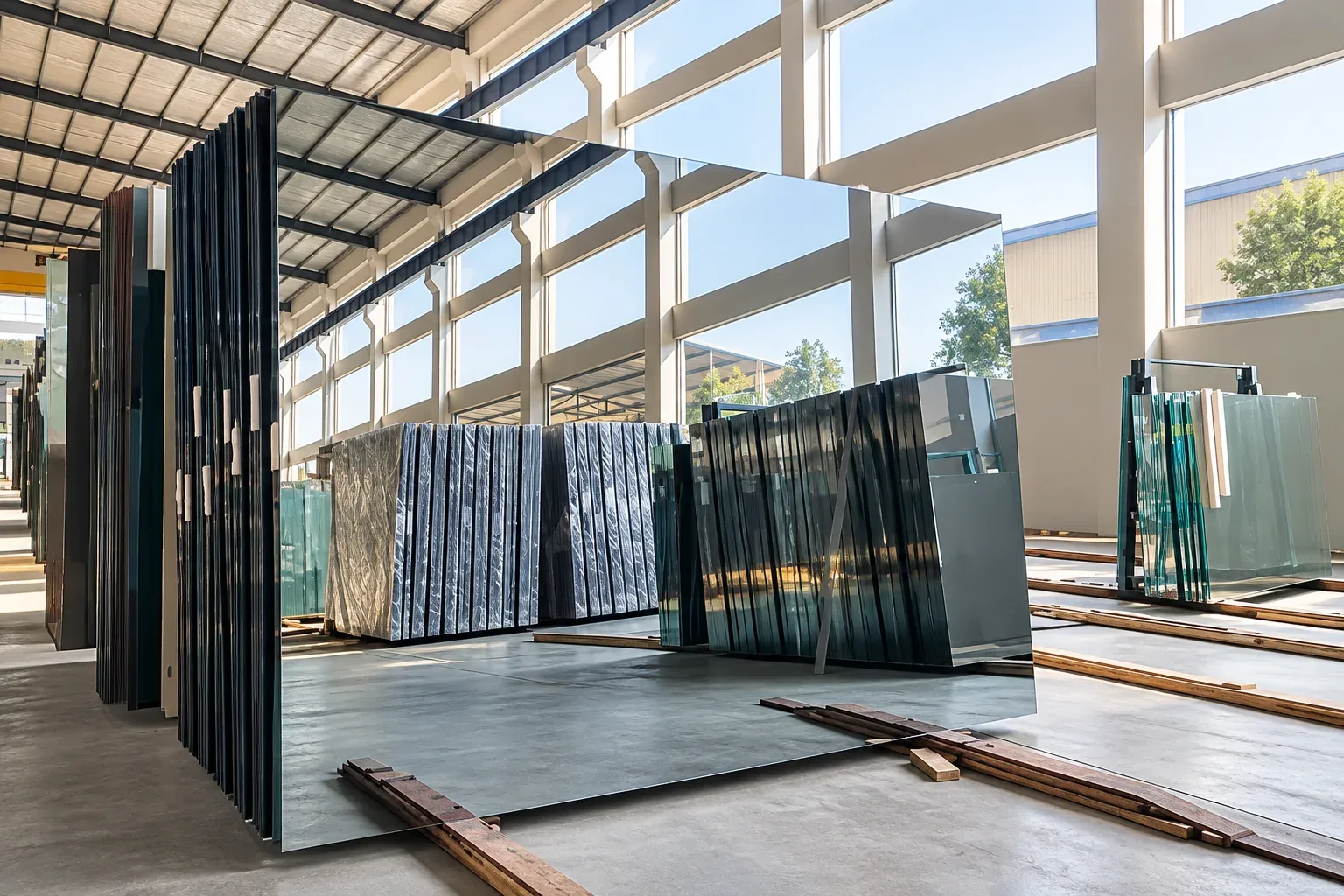
Export packing for processed mirrors requires comprehensive protection against impact and moisture. Panes should be fitted with plastic corner protectors and packed into tight, robust timber cases with closed moisture-barrier liners.
Interleaving paper must be neutral pH and treated with anti-fungicidal agents to prevent paper rot and moisture retention during sea freight voyages spanning multiple climate zones.
Packaging Inspection and Desiccant Monitoring at Receiving Docks
When mirror shipments arrive at regional distribution warehouses, receiving teams must follow a rigorous inspection protocol before accepting the bill of lading. Crates should be checked for vertical transit alignment, external timber integrity, and any signs of water staining or broken steel strapping.
Upon opening the protective plastic shroud inside sample crates, personnel should immediately inspect the included color-indicating silica gel desiccant packs. If desiccant indicators have shifted from blue to pink (indicating moisture saturation), sheets must be unstacked immediately, inspected for capillary condensation, and air-dried in a climate-controlled environment to prevent chemical clouding.
Receiving Inspection Protocols and Container Quality Sign-Off
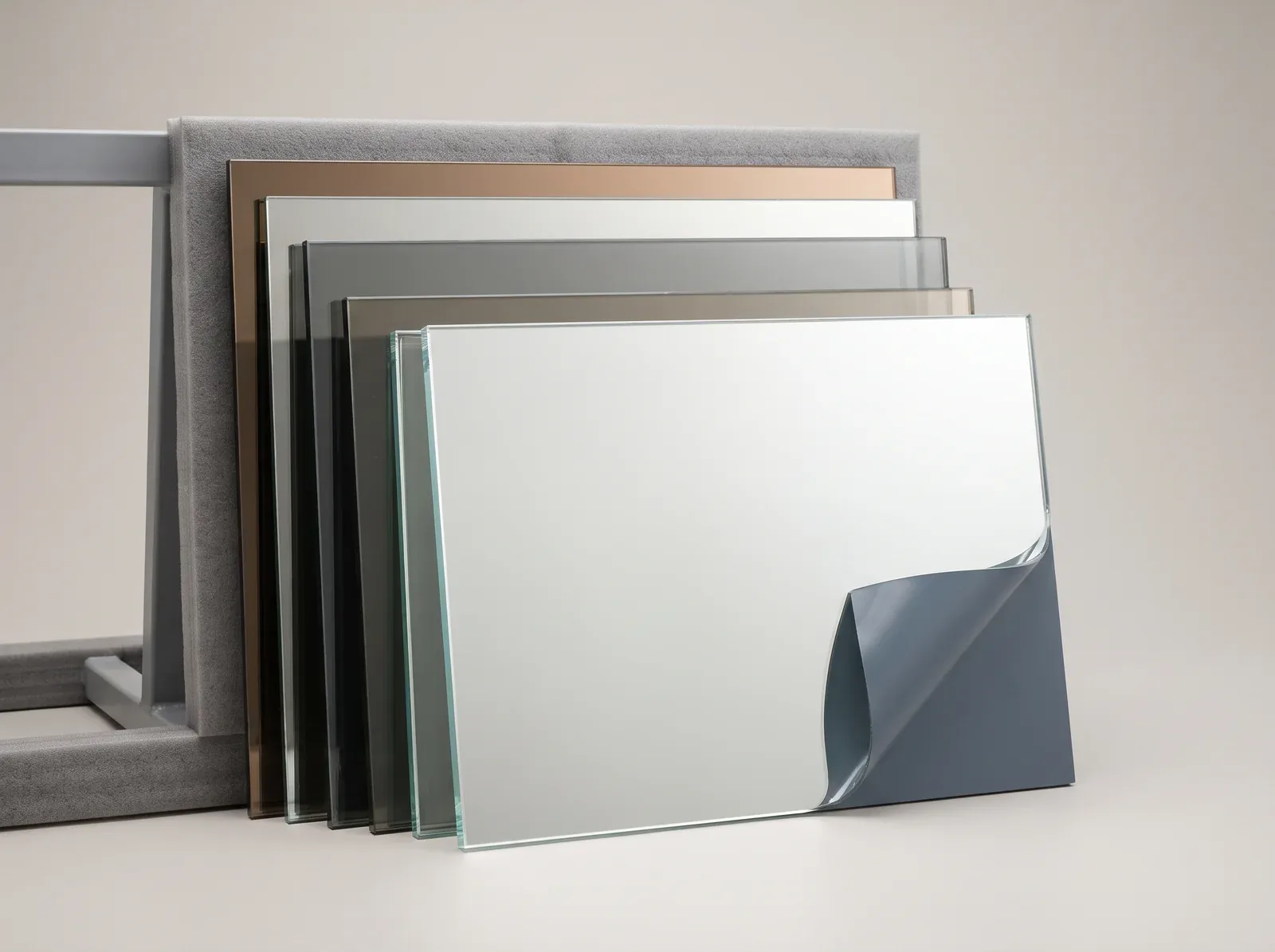
Upon container arrival, warehouse personnel should inspect the exterior timber crates for signs of shifting, water ingress, or impact damage before unloading. For tailored quality plans and custom processing specifications, connect directly with our engineering team via our RFQ portal.
- Record container seal numbers and inspect moisture indicator strips upon opening.
- Sample crates from front, middle, and rear container sections for uncrating inspection.
- Inspect bevel polish quality, corner radius dimensions, and edge sealant uniformity.
- Verify backing paint lot numbers and production date codes on crate labels.
- Conduct cross-hatch adhesion check on sample cut-offs to confirm paint curing.
- Store unpacked stock vertically on felt-lined A-frames in climate-controlled areas.
Frequently asked questions
What is the minimum bevel width that can be ground on a 4mm mirror?
Standard commercial bevel widths on 4mm mirrors range from 10mm to 25mm. Bevels wider than 25mm require a 5mm or 6mm substrate to maintain adequate edge thickness and structural integrity along the perimeter.
Can mirrors be cleaned with commercial ammonia window sprays?
No. Ammonia-based glass cleaners attack the silver and paint layers if the spray runs down and contacts the raw edges of the mirror. Only warm water, neutral soap, or dedicated ammonia-free mirror cleaners should be used.
How long must edge sealant cure before mirror installation?
Edge sealants typically require twenty-four hours of room-temperature curing in a clean, dust-free environment before mirrors are transported or mounted to wall surfaces.
Does safety backing film affect mirror installation adhesives?
Yes. Mirrors with polypropylene safety backing film must be installed using mechanical clips, perimeter channel frames, or specialized adhesives formulated specifically to bond polypropylene polymer backing to wall substrates.
How do you check for optical distortion on large architectural mirrors?
Optical distortion is verified using a standardized zebra board inspection screen featuring alternating black and white diagonal stripes. The inspector views the reflection at a 45-degree angle from 2 to 3 meters away, checking for any waviness or line curvature.
Sources
- EN 1036-2: Glass in building — Mirrors from silver-coated float glass — Part 2: Evaluation of conformity — European Committee for Standardization
- ISO 2409: Paints and varnishes — Cross-cut test for coating adhesion — International Organization for Standardization