
Satin glass, commonly known as acid-etched frosted glass, is an essential material in modern architectural design, offering soft light diffusion, privacy, and smooth tactile surfaces. Produced through controlled chemical etching rather than abrasive sandblasting, it provides superior fingerprint resistance and durability. This technical guide outlines chemical etching mechanics, optical transmission ratings, processing guidelines, and maintenance protocols for commercial buyers.
Chemical Acid-Etching vs Mechanical Sandblasting
Understanding the physical difference between acid-etching and sandblasting is critical for long-term project performance. Sandblasting bombards the glass surface with abrasive particles, creating deep, jagged craters and micro-cracks. This rough surface easily collects dirt, oil, and atmospheric moisture, leading to persistent staining and cleaning difficulties.
Industrial acid-etching treats float glass with an aqueous solution of hydrofluoric acid. The chemical reaction uniformly dissolves microscopic amounts of surface silica, leaving a rounded, satin-smooth micro-texture. This non-porous finish resists oil absorption and retains its luxurious matte look permanently. Learn more about the full range of options on our satin glass product hub.
Light Transmittance and Luminous Diffusion Properties
Satin glass delivers high visible light transmittance while eliminating direct visual glare. Standard 6mm clear acid-etched glass provides approximately eighty to eighty-four percent light transmission, diffusing incident rays evenly across interior spaces without creating harsh bright spots.
Specifiers seeking maximum luminosity combined with complete color neutrality can select ultra-clear low-iron substrates. Acid-etched low-iron glass removes the inherent greenish tint of standard float glass, producing a bright, luminous white surface ideal for backlit feature walls and high-end retail displays.

Surface Durability, Stain Resistance, and Cleaning Standards
Because acid-etching chemically alters the glass structure itself rather than applying a topical organic coating or film, the satin finish will never peel, discolor, or flake over time. The surface hardness matches that of standard annealed or tempered float glass, resisting ordinary abrasive wear.
For maintenance, satin glass requires simple non-abrasive cleaning. Neutral pH glass detergents, warm water, and lint-free microfiber cloths are recommended. Abrasive scouring pads, highly alkaline cleaners, and fluoride-containing compounds must be strictly avoided, as they can permanently damage the frosted micro-texture.
Processing Guidelines: Cutting, Drilling, and Thermal Toughening
Fabricators handle satin glass similarly to standard float glass, but several technical rules apply during processing to protect the etched surface and ensure clean finished edges.
| Recommended Parameter | Quality Precaution | |
|---|---|---|
| Cutting and Scoring | Clean cut on smooth or etched face | Ensure cutting table felts are clean and grit-free |
| Edge Polishing | Flat polished with arris or pencil edge | Use abundant coolant to prevent thermal micro-cracking |
| Hole Drilling | Diamond core drills with water cooling | Drill from both sides to avoid edge breakout |
| Tempering Furnace | Place etched face facing upward away from rollers | Prevent furnace roller contact marking on the matte surface |
| Washing Cycle | Demineralized water rinse with soft nylon brushes | Dry thoroughly with clean air knives to prevent water spots |
Double-Sided vs Single-Sided Etching and Orientation Rules
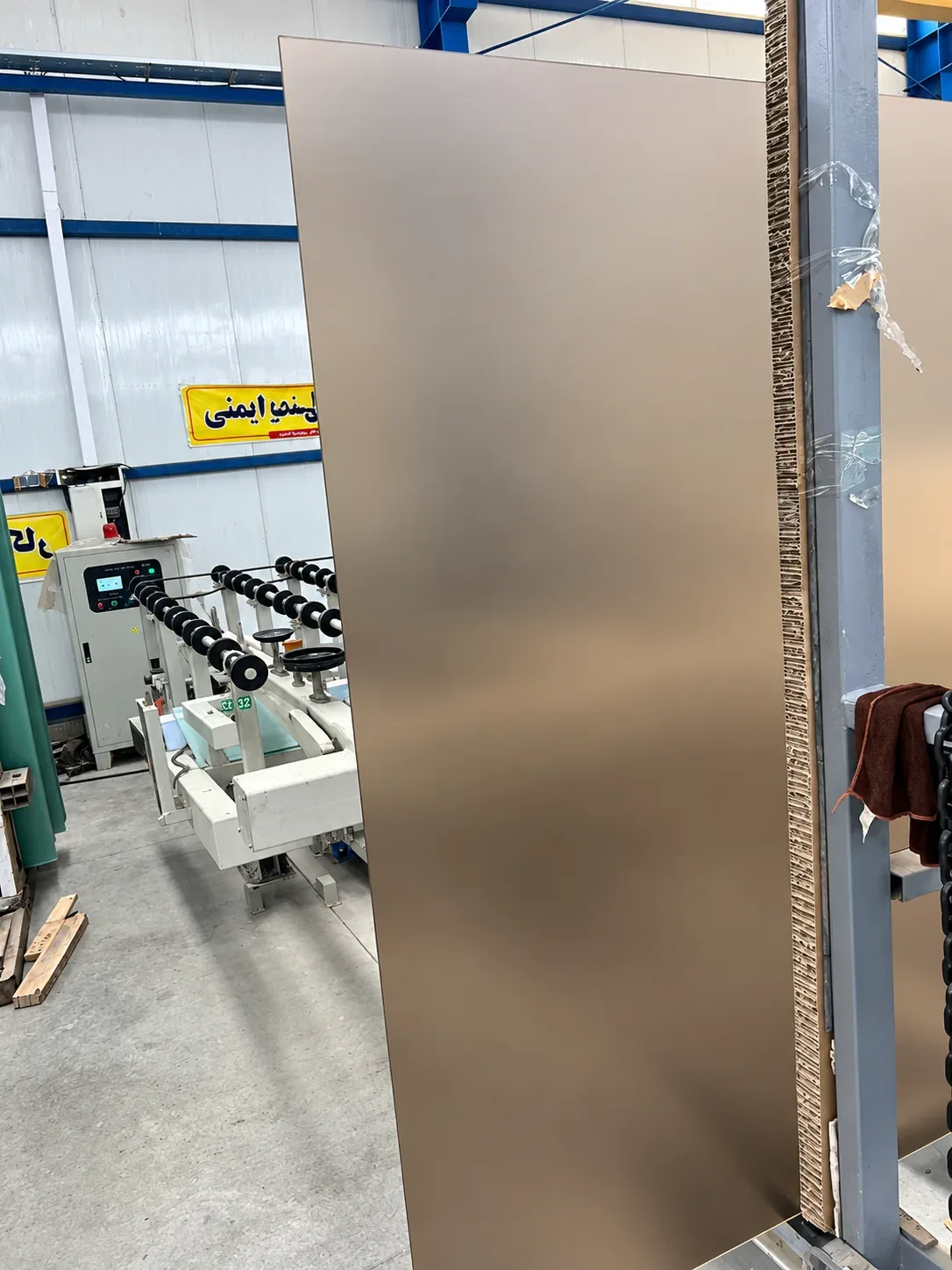
Satin glass is available in both single-sided and double-sided acid-etched configurations. Single-sided etching is standard for interior doors, partitions, and balustrades, offering one frosted face for light diffusion and one glossy face for ease of cleaning in high-traffic corridors.
Double-sided etching provides maximum obscurity and a completely glare-free appearance from both viewing angles, making it popular for luxury furniture tops, modesty panels, and artistic lighting diffusers where both surfaces remain permanently exposed.
Lamination with Clear, Acoustic, and Structural Interlayers
Satin glass is frequently specified in laminated assemblies for balustrades, overhead glass walkways, and exterior glass canopies where anti-slip or privacy characteristics are mandated by building safety regulations. In laminated configurations, single-sided satin glass is typically assembled with the acid-etched face oriented to the outside (Surface 1 or Surface 4) to maintain its diffuse visual texture.
If the acid-etched face is placed in direct contact with the polymer interlayer (Surface 2 or Surface 3), the molten PVB or ionoplast interlayer fills the microscopic acid-etched valleys. Because the refractive index of the polymer closely matches that of the glass substrate, the frosted effect diminishes significantly, rendering the pane translucent-clear rather than opaque matte.
Surface Roughness Ra Testing, Haze Factor, and Gloss Measurement
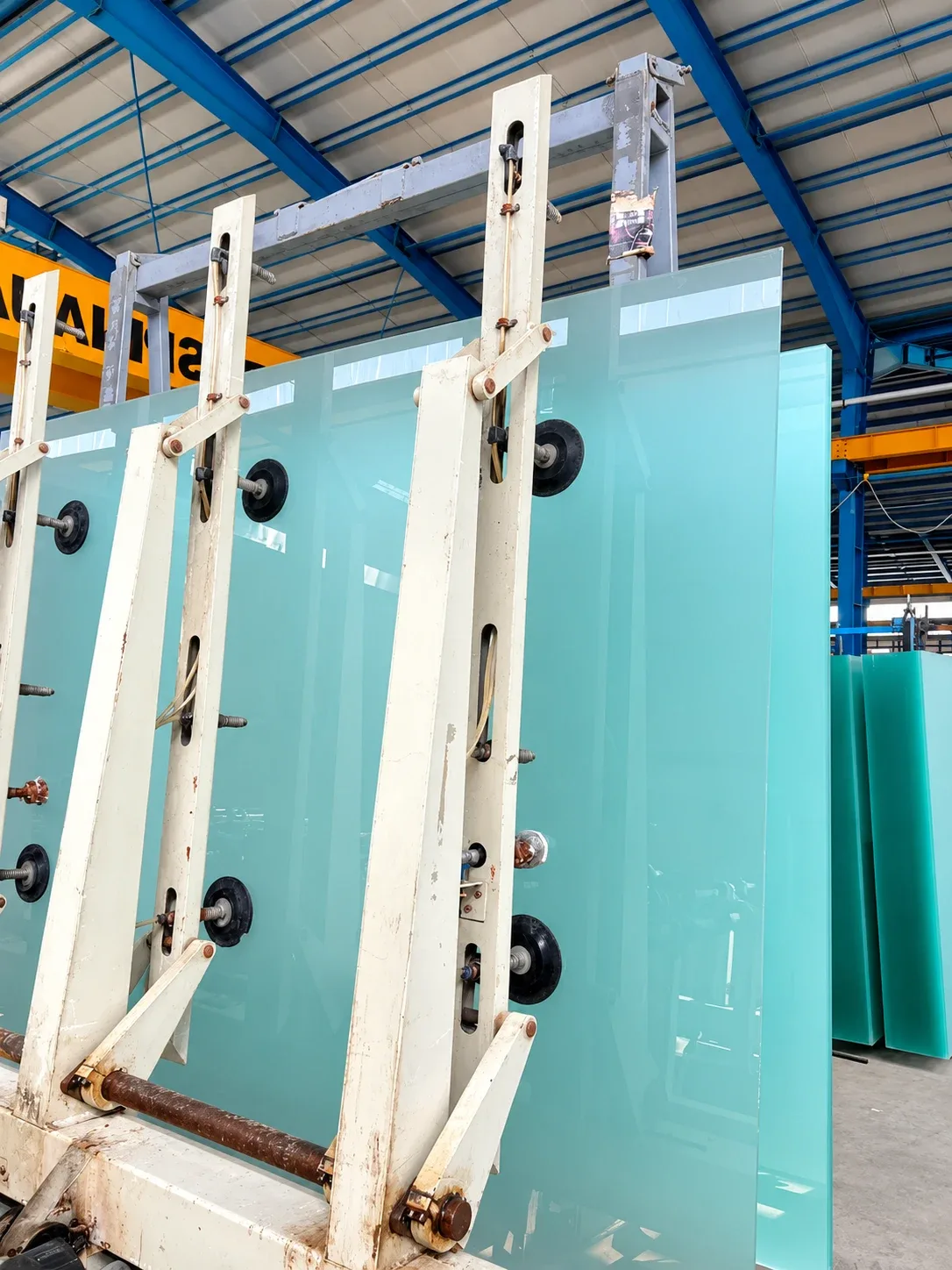
Architectural specifications often quantify satin glass texture using objective physical metrology. Standard optical tests measure surface gloss at a sixty-degree geometry using a calibrated glossmeter, alongside optical haze testing according to international plastic and glass haze standards.
High-grade architectural satin glass typically exhibits a sixty-degree gloss value between twenty and thirty-five gloss units (GU) and an optical haze exceeding ninety percent. Surface profilometry yields an average surface roughness (Ra) typically ranging between 0.3 and 0.8 micrometers, confirming a velvety smooth tactile finish that prevents oil absorption while maintaining uniform light diffusion.
Anti-Slip Satin Glass for Floors and Stair Treads
Specialized chemical acid-etching formulations are developed for architectural walking surfaces, such as structural glass stair treads, skywalks, and pedestrian bridge decking. Standard polished or smooth glass presents a severe slip hazard when wet, with dynamic coefficient of friction values dropping dangerously below legal building safety limits.
Anti-slip satin glass features deeply etched, high-traction geometric or stippled micro-reliefs specifically engineered to channel water away from shoe soles. Evaluated under international pendulum slip tests (such as low-slip-risk pendulum test values PTV > 36) and ramp friction classifications (such as commercial R10 to R12 ratings), anti-slip satin glass provides reliable traction under both dry and wet pedestrian traffic while preserving natural daylight transmission between floor levels.
Sourcing Specifications and Container Delivery Inspection
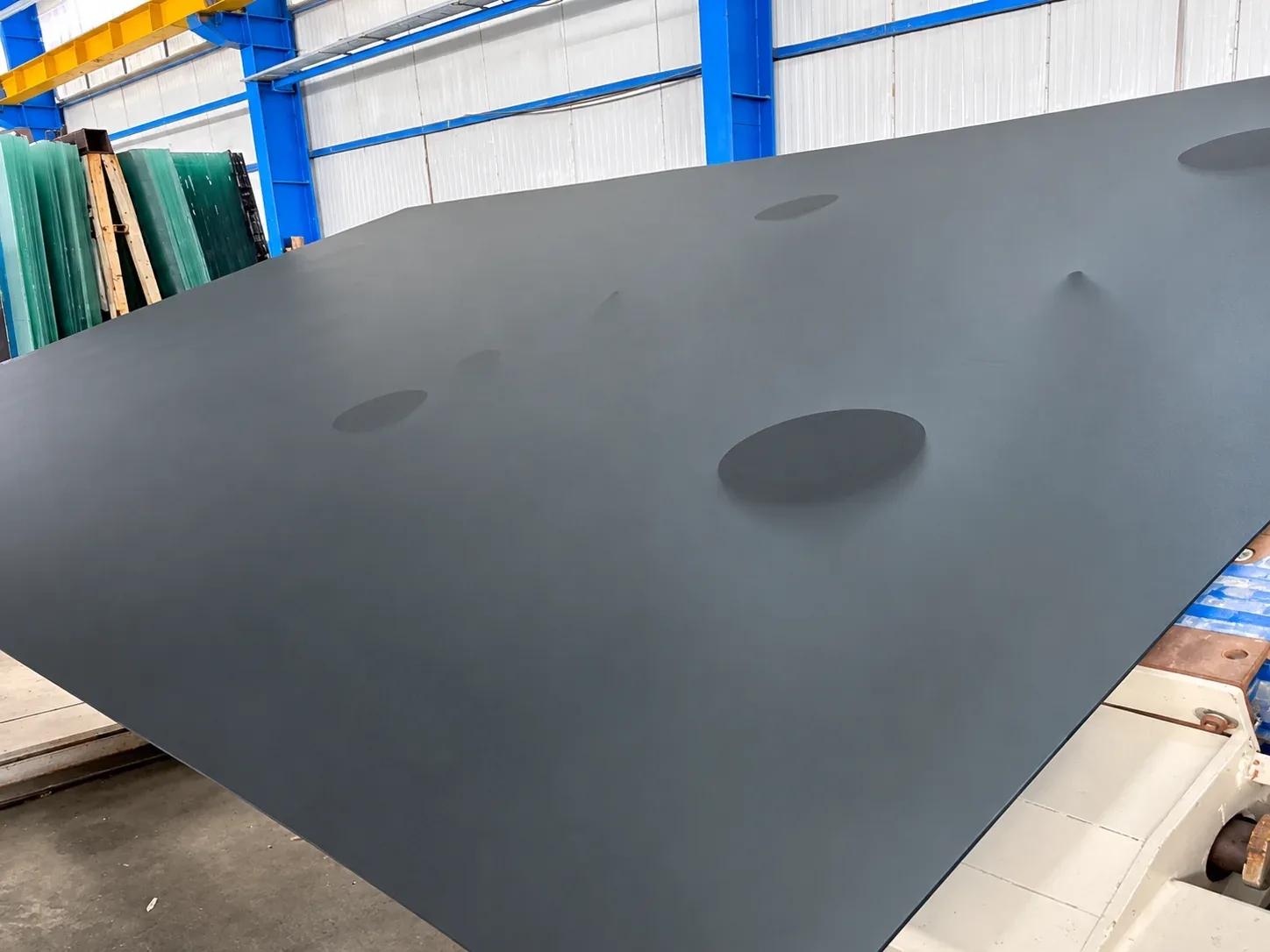
When procuring satin glass for international export shipments, specifiers should clearly define substrate quality, sheet dimensions, and interleaving protection. To initiate a formal quotation for commercial volume supply, please submit your tender documents via our RFQ portal.
- Substrate specification: Standard Clear Float versus Ultra-Clear Low-Iron Float.
- Nominal thickness: 4mm, 5mm, 6mm, 8mm, 10mm, or 12mm panels.
- Etching configuration: Single-sided versus double-sided chemical treatment.
- Standard sheet sizes: 2140x3300mm, 2440x3660mm, or custom fabricated panels.
- Interleaving requirement: Clean moisture-barrier interleaving paper between all sheets.
- Seaworthy packaging: Heavy-duty wooden end-caps with moisture-desiccant packs.
Frequently asked questions
Can satin glass be used on the exterior of a building?
Yes. Satin glass is frequently used in exterior spandrel panels, rainscreen cladding, and insulated glass units. In double-glazing assemblies, the etched surface is typically oriented on surface two or three facing the internal air cavity to protect it from weather deposits.
How do you remove stubborn grease or oil stains from satin glass?
Minor oil marks can be removed using isopropyl alcohol or acetone applied with a clean microfiber cloth, followed by a warm water rinse and immediate drying with a lint-free towel.
Can acid-etched satin glass be curved or bent?
Yes. Satin glass can be curved in architectural bending furnaces following standard heating curves, provided the etched surface is oriented away from direct furnace tooling contact.
Is satin glass suitable for shower screens?
Yes, satin glass is widely specified for shower enclosures. It is best installed with the smooth glass face oriented toward the interior shower space to simplify squeegee cleaning, leaving the etched face on the dry exterior.
Does acid-etched glass weaken the structural strength of float glass?
Because acid-etching uniformly dissolves microscopic surface flaws and rounds micro-crack tips rather than creating sharp impact fractures like sandblasting, the mechanical breaking strength of acid-etched glass is nearly identical to that of pristine float glass.
Sources
- EN 12150-1: Glass in building — Thermally toughened soda lime silicate safety glass — European Committee for Standardization
- ASTM C1048: Standard Specification for Heat-Strengthened and Fully Tempered Flat Glass — ASTM International