
Specifying high-performance silver mirror glass for architectural, hospitality, and furniture applications demands rigorous evaluation of reflective metal layers, protective backing paints, and edge corrosion resistance. Modern copper-free silver mirrors offer superior longevity and optical reflectivity compared to traditional aluminum or early copper-backed mirrors. This guide breaks down manufacturing metallurgy, backing specifications, and procurement criteria for international importers.
Chemical Silvering vs Aluminium Coating Deposition
Architectural mirrors are categorized primarily by the reflective metallic layer deposited onto the float glass substrate. Aluminum mirrors utilize physical vapor deposition inside a vacuum chamber, creating an economical mirror with approximately eighty-five to ninety percent visual reflectance. However, aluminum is vulnerable to atmospheric oxidation and moisture degradation.
Silver mirrors utilize a wet chemical silvering process where pure metallic silver is precipitated onto the sensitized glass surface. Silver achieves an exceptional visual reflectance of ninety-four to ninety-six percent, providing vibrant, distortion-free optical depth and warmer, more accurate skin tones. For complete specifications across standard thicknesses and container packing, visit our dedicated mirror product hub.
Multi-Layer Protective Backing Paint and Copper-Free Systems
The longevity of a silver mirror depends directly on how effectively its microscopic silver layer is protected from chemical attack. Traditional manufacturing applied a galvanic copper layer followed by an oil-based backing paint. While functional, copper layers eventually oxidize when exposed to ammonia or ambient chlorides, causing black edge creep.
Modern environmental specifications demand copper-free silver mirrors. These advanced production lines replace the copper layer with specialized chemical passivation agents, followed by two separate coats of lead-free, resin-based protective paint. The dual-coat paint system creates an impermeable barrier against moisture and atmospheric sulfur.

Float Glass Substrate Standards and Distortion Prevention
An optical reflection is only as flat as the underlying glass substrate. Premium mirrors are manufactured using mirror-grade float glass characterized by exceptional thickness uniformity, zero roller-wave distortion, and minimal microscopic surface inclusions.
For luxury architectural applications and retail fitting rooms, mirrors manufactured on ultra-clear low-iron float glass eliminate the subtle greenish edge tint of standard glass. This results in perfectly neutral reflections that accurately reproduce cosmetic pigments and fabric colors without tint bias.
Edge Corrosion Mechanics and Humidity Resistance Factors
Edge corrosion, often observed as dark spots or feathery black margins, is the leading cause of premature mirror failure in humid environments like bathrooms and coastal hotels. When mirror sheets are cut to size, the raw edges expose the delicate interface between silver, glass, and backing paint.
| Standard Aluminium Mirror | Traditional Copper Silver Mirror | Eco Copper-Free Silver Mirror | |
|---|---|---|---|
| Visual Reflectance | 85% to 90% | 92% to 94% | 94% to 96% |
| Neutral Salt Spray Resistance | Under 100 hours | Around 240 hours | Exceeds 480 hours |
| Copper Accelerated Salt Spray (CASS) | Under 24 hours | Around 48 hours | Exceeds 120 hours |
| Humidity Chamber Stability | Moderate | Good | Superior (Continuous 50°C at 95% RH) |
| Environmental Compliance | Standard | Contains copper/lead traces | Lead-free, copper-free, non-toxic |
These duration figures represent standardized laboratory benchmarks under controlled continuous chamber conditions per international mirror test methods (such as neutral salt spray and copper-accelerated salt spray tests). Actual field performance depends heavily on perimeter edge sealing, ambient ventilation, and adhesive compatibility during installation.

Safety Backing Options: Category II Polypropylene vs Woven Mesh
In public commercial spaces, hotels, schools, and sliding wardrobe doors, building safety codes frequently mandate shatter-safe mirror backing. When an annealed silver mirror fractures from heavy mechanical impact, sharp shards can detach and cause severe injuries.
To satisfy safety standards, manufacturers apply a high-tack polypropylene adhesive film (Safety Film Type CAT II) across the rear painted surface. In the event of pane breakage, the elastomeric film securely holds shattered glass fragments together, preventing injury and maintaining opening containment until replacement can occur.
Environmental Formulations: Low-VOC Backing Paints and Lead-Free Systems
Environmental regulations in the European Union, North America, and Gulf regions have phased out legacy mirror backing paints containing lead pigments and volatile aromatic solvents. Contemporary mirror manufacturing utilizes water-based or high-solids polyurethane backing formulations containing less than 0.2% lead and low volatile organic compounds (VOCs).
These eco-friendly backing systems offer enhanced chemical resistance against bathroom cleaning detergents and moisture, ensuring compliance with international green building certification standards while safeguarding factory workers during secondary fabrication.
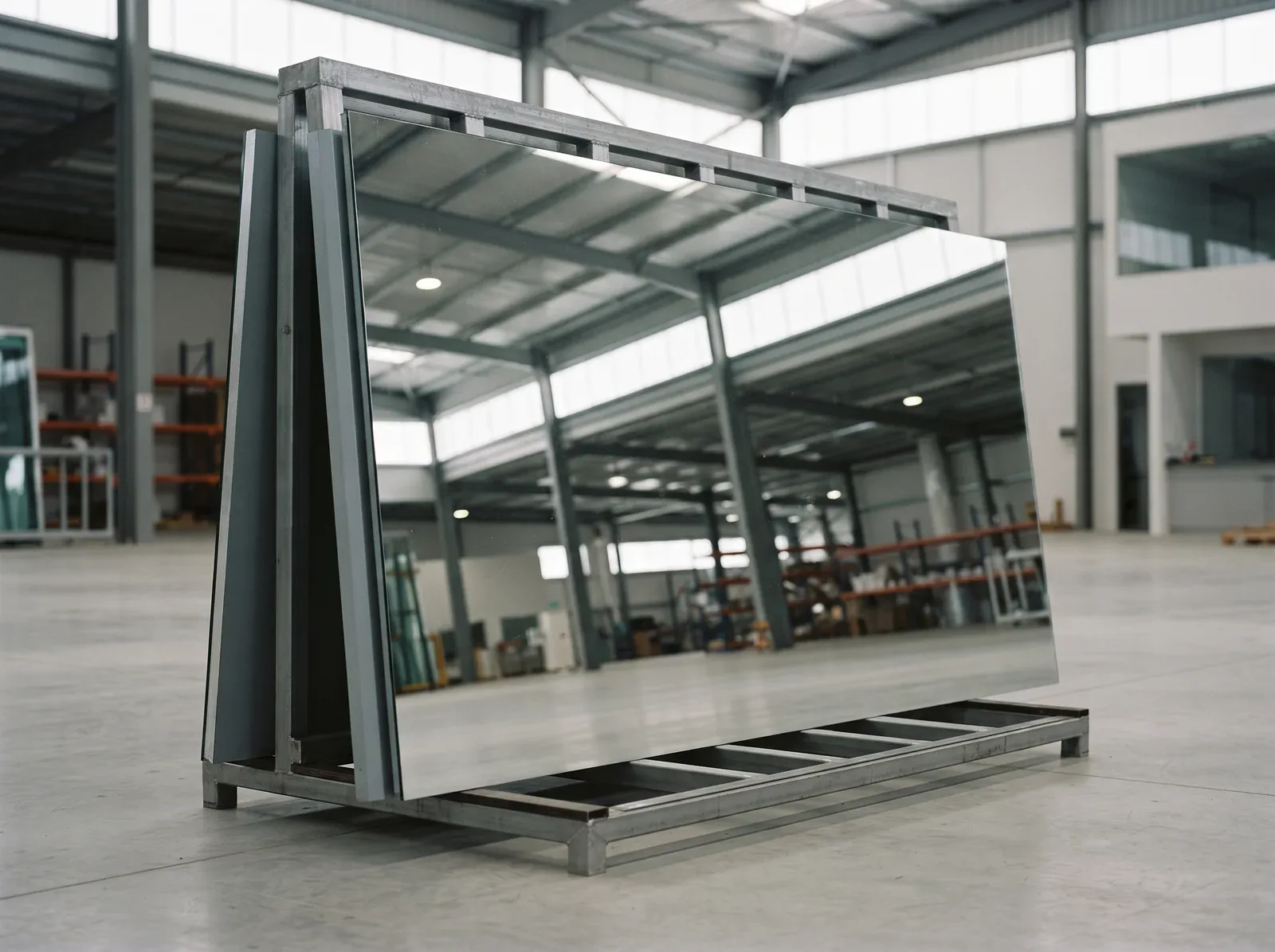
Beveling Geometry and Edge Strength Calculations
Decorative perimeter beveling is a hallmark of luxury architectural mirrors, enhancing light refraction along framed or frameless borders. Standard commercial bevel widths range from 10mm to 25mm on 4mm mirrors, expanding up to 35mm to 40mm on 5mm and 6mm substrates.
During beveling, diamond grinding wheels remove substantial glass volume from the perimeter face, creating an angled facet that terminates at a thin remaining edge thickness. Specifiers must ensure that the remaining edge thickness never drops below 1.5mm. An excessively razor-thin bevel edge is highly prone to micro-chipping during transport and installation, creating entry points for atmospheric moisture and premature silver corrosion.
Handling, Safe Unloading, and Storage in High-Humidity Climates
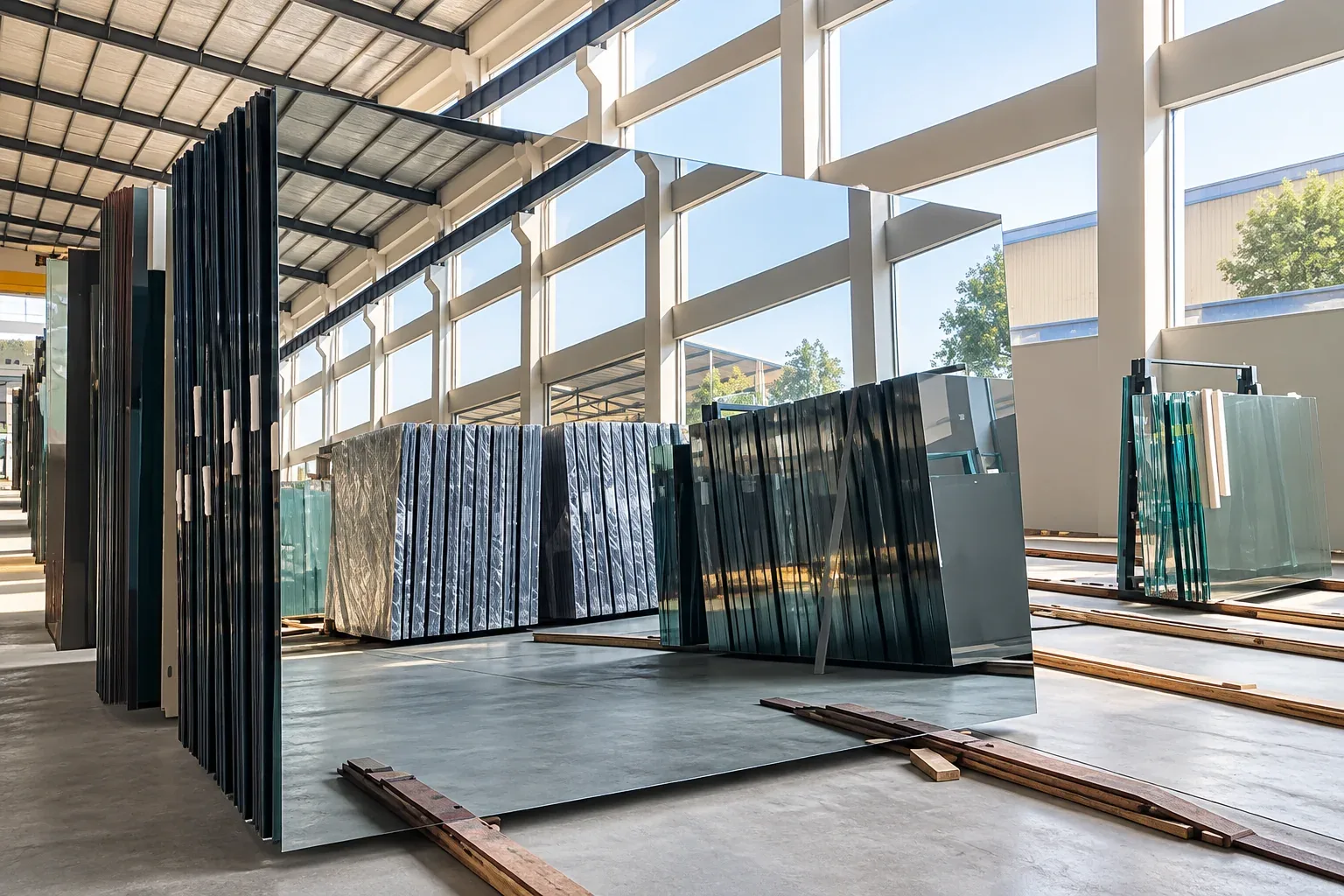
During international sea transit and warehouse storage, mirrors must be protected from condensation. Moisture trapped between tightly stacked mirror sheets creates capillary action, drawing moisture across the edges and generating chemical clouding before installation.
Mirror crates must be stored in dry, well-ventilated indoor warehouses, elevated on timber pallets away from concrete floors. Interleaving powder containing corrosion inhibitors is applied between all sheets during factory packaging to allow air circulation and prevent surface scratching.
Commercial Specification Checklist for Container Orders
Procurement teams preparing international mirror orders should clearly outline coating technology, substrate grade, and protective packaging requirements. For immediate commercial qualification and logistics coordination, request a proposal through our RFQ portal.
- Specify silvering metallurgy: modern copper-free silver versus vacuum aluminum deposition.
- Glass substrate grade: standard mirror-grade float versus low-iron ultra-clear substrate.
- Nominal thickness and sheet dimensions: 3mm, 4mm, 5mm, or 6mm in standard 2140x3300mm or 2440x3660mm cases.
- Backing paint system: double-coated lead-free epoxy or polyurethane protective paint.
- Safety backing requirement: Category II polypropylene safety film applied to rear face.
- Edge sealing specification: factory arrissed edges with neutral moisture-barrier sealing.
- Seaworthy packing: end-cap timber crates lined with waterproof plastic and desiccants.
Frequently asked questions
What causes black edges on bathroom mirrors?
Black edges are caused by oxidation and chemical attack of the silver reflective layer, typically resulting from ambient humidity, steam, or acidic silicones penetrating unprotected cut edges where paint coverage is compromised.
Can silver mirrors be thermally tempered?
Standard silver mirrors cannot be tempered after coating because furnace temperatures would destroy the silver and backing paint. If tempered mirrors are required, specialized pyrolytic high-temperature reflective coatings or post-temper silvering methods must be specified.
What is the reflectivity difference between silver and aluminum mirrors?
Silver mirrors reflect 94% to 96% of visible light with true color fidelity, whereas aluminum mirrors reflect 85% to 90% and tend to have a slightly colder, dimmer optical cast.
Which adhesive should be used to install silver mirrors?
Only neutral-cure mirror mastics specifically labeled as mirror-safe should be used. Acid-curing silicones release acetic acid during curing, which dissolves backing paint and oxidizes the silver within weeks.
What is the role of low-iron glass in mirrors?
Low-iron glass eliminates the greenish edge tint inherent in standard float glass, providing ultra-clean, color-accurate reflections ideal for cosmetic vanity mirrors, retail dressing rooms, and art galleries.
Sources
- EN 1036-1: Glass in building — Mirrors from silver-coated float glass for internal use — European Committee for Standardization
- ISO 9227: Corrosion tests in artificial atmospheres — Salt spray tests — International Organization for Standardization