
Selecting between body-tinted float glass and coated reflective glass is a fundamental decision in commercial solar control. While body-tinted glass absorbs incoming solar radiation within the glass matrix, reflective coatings bounce radiant energy away from the facade. This guide breaks down the optical physics, thermal stress behavior, and procurement considerations needed to specify the correct product for your architectural envelope.
How Solar Radiation Interacts with Architectural Glass
When sunlight strikes a pane of architectural glazing, the incident radiant energy divides into three distinct physical pathways governed by the conservation of energy: transmitted energy that passes directly indoors, reflected energy that bounces back into the external atmosphere, and absorbed energy that heats the glass pane itself. Controlling the quantitative balance between these three energy pathways determines whether a commercial building overheats during peak summer months, how much mechanical cooling energy is consumed by central HVAC chillers, and how naturally illuminated interior workspaces remain throughout daylight hours.
Standard monolithic clear float glass offers limited solar control capability, transmitting over eighty percent of incident solar radiation and generating intense greenhouse heating in glazed spaces. To improve building envelope energy performance, facade designers and procurement specialists turn to two primary glass technologies: body-tinted float glass and surface-coated reflective glass. Both solutions reduce solar heat gain, yet their underlying thermodynamic mechanisms, daylight quality, aesthetic appearances, and secondary processing constraints differ significantly. For comprehensive technical availability across standard sheet thicknesses and container configurations, consult our dedicated tinted glass and reflective glass product hubs.
Body-Tinted Float Glass: Absorption Mechanics and Color Consistency
Body-tinted float glass, commonly termed tinted or heat-absorbing glass, is manufactured by introducing controlled concentrations of metallic oxide colorants directly into the standard silica-soda-lime batch formulation inside the primary float melting furnace. Cobalt oxide yields deep blue and bronze tones, iron oxide in varying oxidation states produces classical green and blue-green hues, and selenium additions produce neutral gray tints. Because these metal oxides become completely dissolved within the molten glass matrix, the resulting glass ribbon exhibits homogeneous, permanent coloration throughout its entire cross-sectional thickness that will never peel, degrade, or fade under intense ultraviolet exposure.
The fundamental solar control mechanism of body-tinted glass is radiation absorption. Rather than rejecting solar energy at the exterior surface, tinted glass absorbs a substantial fraction of incident infrared radiation and visible light wavelengths directly within the pane bulk. This absorbed energy converts into internal thermal energy, causing the pane temperature to rise significantly above ambient air temperatures. The stored heat is subsequently dissipated away from the glass pane via thermal radiation and surface air convection toward both the exterior atmosphere and the interior building space. Consequently, the net solar heat gain coefficient depends heavily on outdoor wind speed and indoor ventilation conditions.
Coated Reflective Glass: Pyrolytic Surface Reflection and Orientation
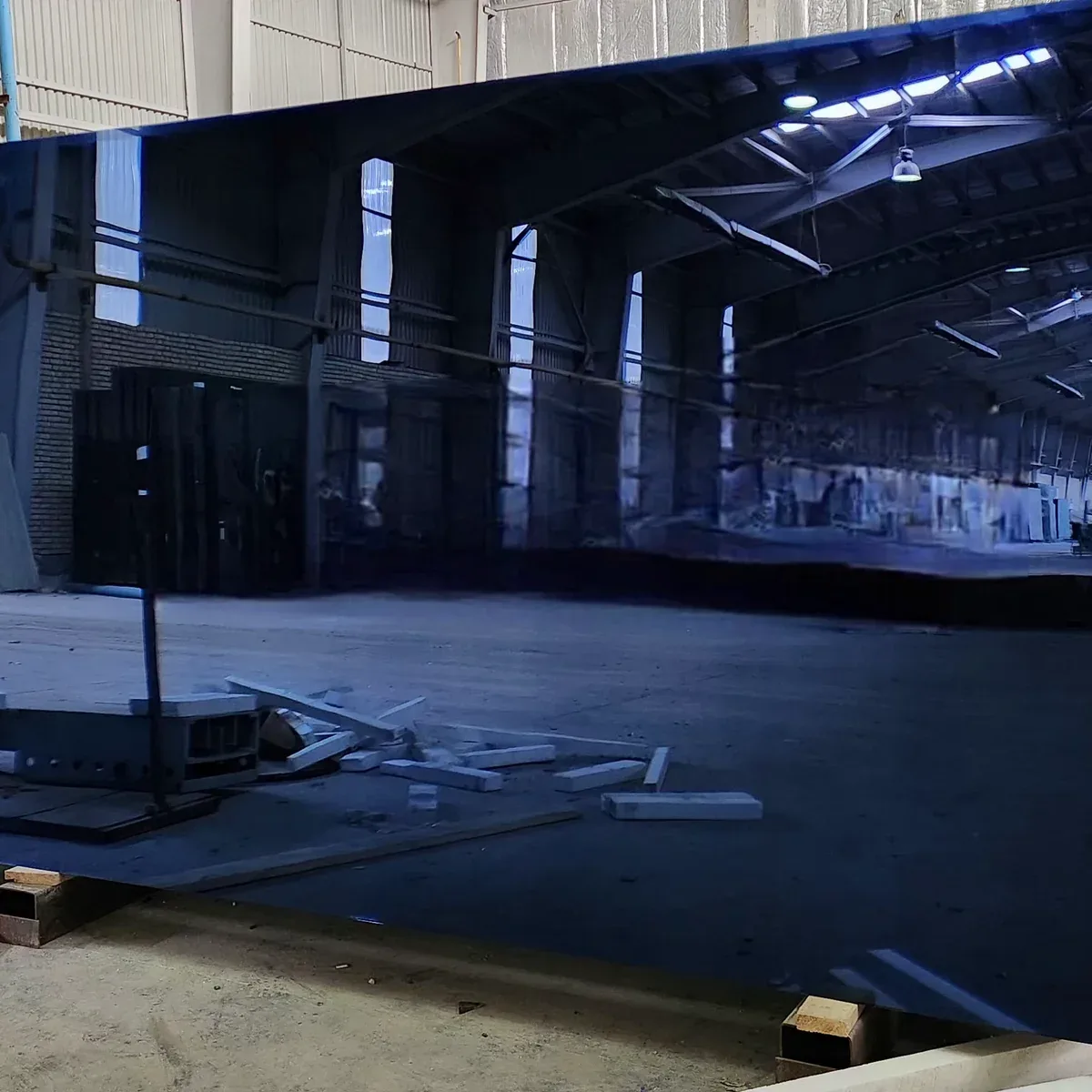
Reflective architectural glass manages solar energy primarily through optical surface reflection rather than internal bulk absorption. This is achieved by depositing a microscopic, highly uniform metallic or metal-oxide coating onto the glass substrate. Online pyrolytic coatings, often designated as hard coatings, are applied inside the float bath lehr while the newly formed glass ribbon remains at temperatures near six hundred degrees Celsius. At this elevated temperature, metal chemical vapors react directly with the glass surface, chemically bonding the reflective oxide layer into the silica matrix to form an exceptionally durable, scratch-resistant, and chemically inert surface.
Because pyrolytic reflective coatings physically redirect incident shortwave infrared rays before they penetrate into the substrate, the glass pane absorbs significantly less solar energy than a deeply tinted pane. When specifying coated glass for architectural glazing, coating orientation is of paramount engineering importance. In monolithic single-glazed installations, the reflective coating is almost universally positioned on surface two—the interior-facing surface of the pane. This orientation shields the micro-thin coating from atmospheric sand abrasion, bird impacts, and aggressive cleaning chemicals while maintaining optimal solar reflectance.
Optical and Thermal Performance Comparison
Evaluating glazing performance requires rigorous analysis of standardized optical metrics determined in accordance with international glass testing standards. Specifiers must balance visible light transmittance with the solar heat gain coefficient (SHGC) to optimize interior comfort.
| Clear Float (6mm Substrate) | Body-Tinted Float (6mm Euro Gray) | Online Reflective (6mm Neutral Silver) | |
|---|---|---|---|
| Visible Light Transmittance (VLT) | 88% to 90% | 42% to 50% | 20% to 35% |
| Outdoor Visible Reflectance (VLR) | 8% | 5% to 7% | 18% to 32% |
| Solar Heat Gain Coefficient (SHGC) | 0.81 to 0.83 | 0.55 to 0.62 | 0.34 to 0.44 |
| Light-to-Solar Gain Ratio (LSG) | 1.08 to 1.10 | 0.75 to 0.85 | 0.65 to 0.80 |
| Primary Solar Control Mode | Direct Transmission | Internal Bulk Absorption | Surface Reflection |
| Thermal Stress Fracture Risk | Low | Moderate to High | Moderate |
As demonstrated by empirical test data, reflective coatings achieve markedly lower solar heat gain coefficients than monolithic tinted panes, making them highly effective in hot, sun-drenched regions. However, this dramatic heat reduction comes at the expense of lower visible light transmittance, which can increase artificial interior lighting demands if not carefully balanced across facade elevations.
Daylighting Quality, Glare Control, and Color Rendering Index
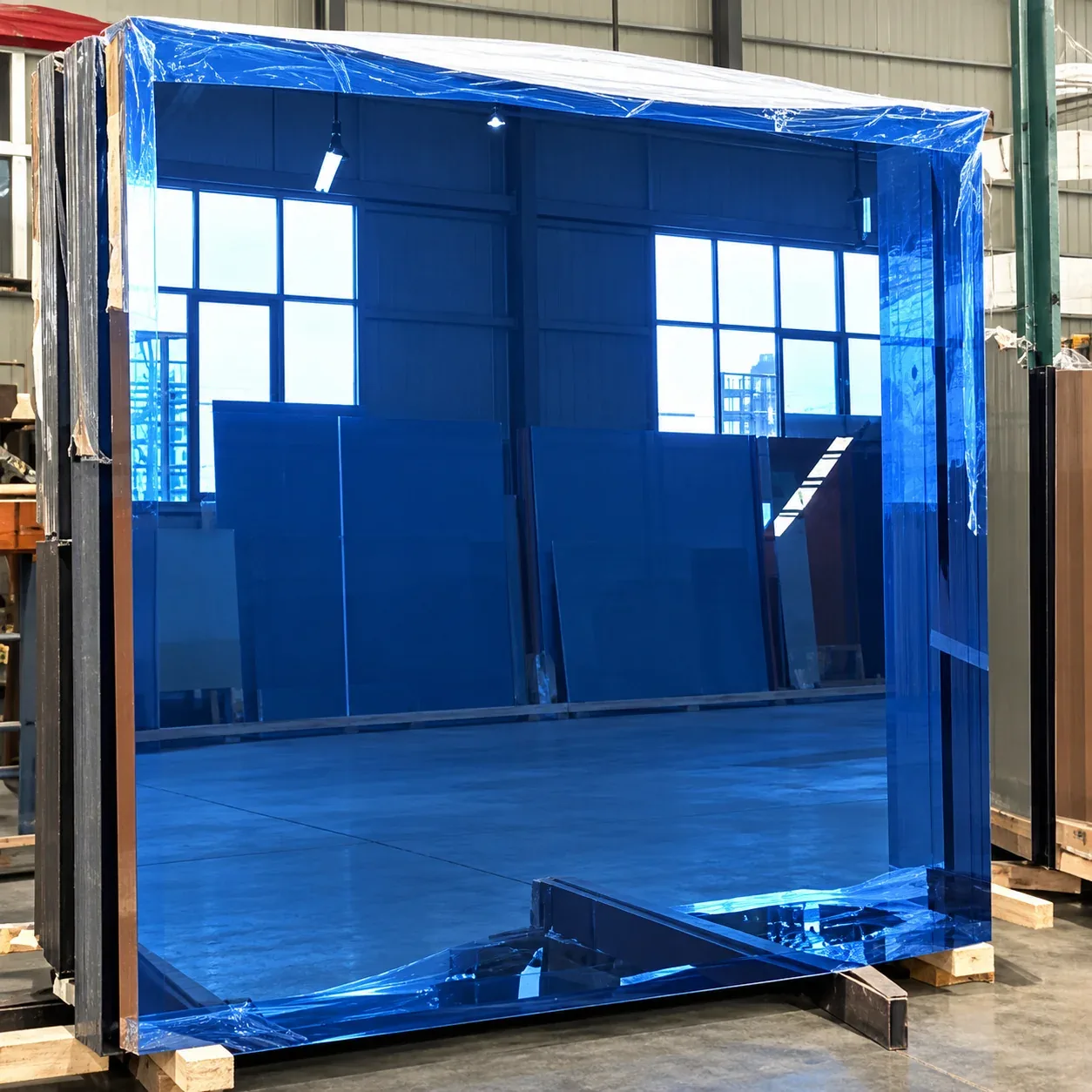
Beyond pure thermal energy calculations, architectural glazing directly shapes the human visual experience within occupied spaces. Body-tinted glass functions as an optical spectral filter: green tints absorb red and blue wavelengths, bronze tints filter blue light, and gray tints attenuate the visual spectrum relatively evenly. While tinted panes effectively reduce daylight glare on computer monitors and working desks, strongly colored tints can noticeably alter the color rendering index (CRI) of transmitted daylight, imparting an unnatural chromatic cast to interior walls, furnishings, and occupant skin tones.
Neutral reflective coatings, by contrast, reflect light relatively uniformly across the visible spectrum, maintaining a higher color rendering index for occupants inside while presenting a modern, metallic mirror-like aesthetic from the exterior streetscape. For commercial office towers and educational institutions where true natural color fidelity and glare-free working conditions are simultaneously required, specifiers frequently combine neutral low-reflectance pyrolytic coatings on neutral gray or clear float substrates.
Processing, Cutting, and Edge Thermal Stress Risks
Because body-tinted glass absorbs a large fraction of incident solar radiation, the central area of a sunlit window heats up rapidly, reaching temperatures significantly higher than ambient air. Meanwhile, the perimeter edges of the pane remain shielded inside window framing gaskets, kept cool by the building mass. This stark temperature gradient creates intense tensile stresses along the glass perimeter. If the glass edge cut contains micro-chips, runner cracks, or rough serrations, thermal stress cracking can propagate spontaneously across the pane.
To prevent thermal stress failures in dark body-tinted panes, fabricators must execute pristine edge work. Standard rough cut edges should be dressed with a flat arris or machine ground polish to eliminate micro-flaws. Furthermore, dark tinted panes installed on sun-exposed facades frequently mandate heat-strengthening or full thermal tempering to increase their mechanical thermal shock resistance above one hundred and fifty degrees Celsius.
Reflective glass demands specialized handling protocols during cutting and washing. Online pyrolytic hard coatings can generally be cut, arrissed, and thermally tempered using standard processing equipment without edge-deletion. Offline sputtered soft coatings, however, must have their perimeter coatings mechanically stripped (edge-deleted) before lamination or assembly into insulating glass units to prevent atmospheric moisture from corroding the vulnerable metallic layers.
Thermal Breakage Risk Analysis and Heat Treatment Guidelines
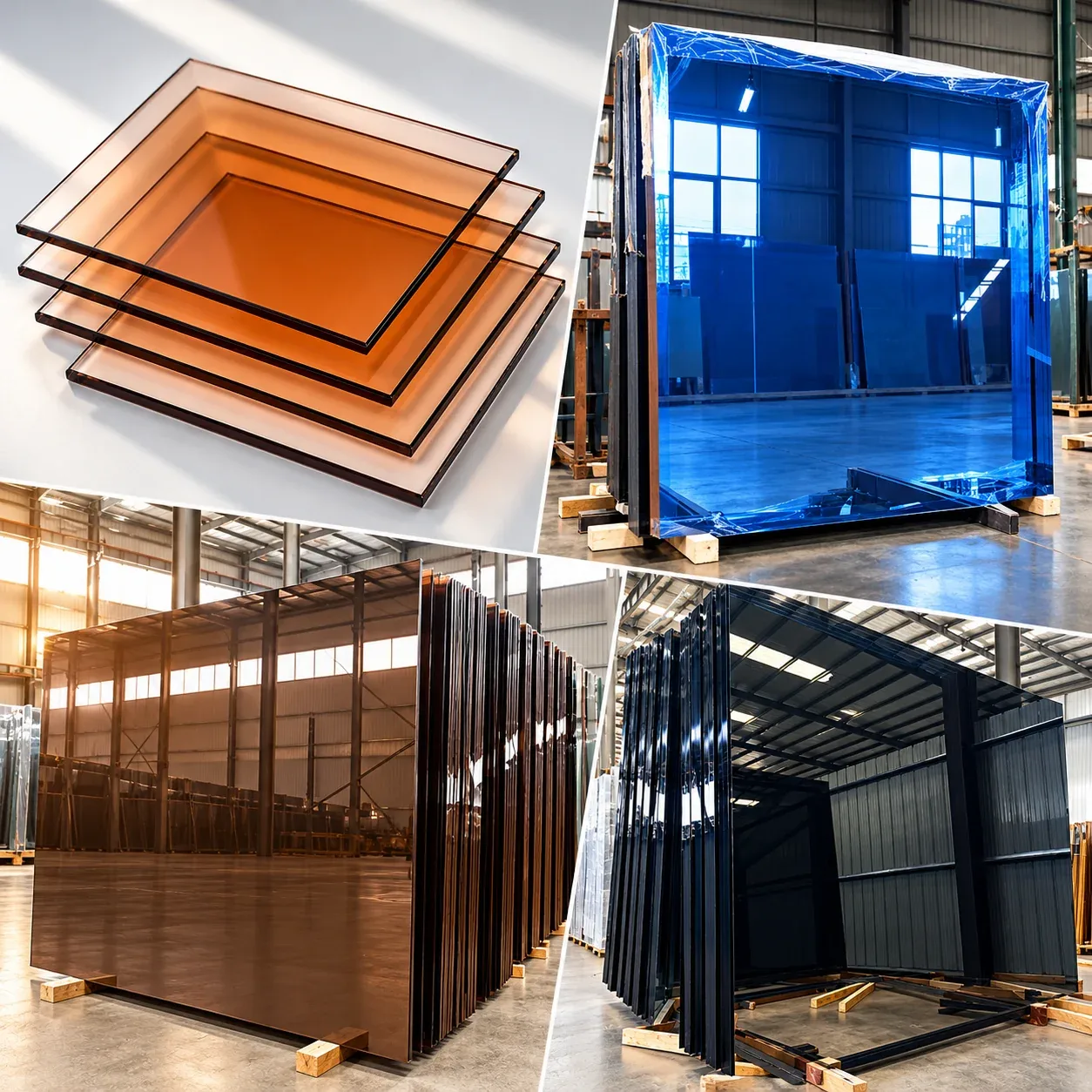
Determining whether an architectural pane requires thermal heat treatment requires a systematic thermal stress risk assessment. Key variables include the glass solar absorption percentage, the thermal conductivity of the frame material (aluminum, thermally broken aluminum, or uPVC), internal shading devices such as roller blinds or heavy drapes, and external cast shadows from building overhangs or adjacent structures.
When internal solar absorption exceeds fifty percent—common in dark bronze, dark blue, and dark gray tinted glasses—the anticipated edge temperature differential under clear summer skies often exceeds the safe thirty-degree Celsius limit for annealed glass. In such project conditions, specifying heat-strengthened glass (with surface compression between forty and sixty-nine megapascals) provides ample resistance against thermal breakage without the spontaneous shatter risks associated with nickel sulfide inclusions in fully tempered glass.
Procurement and RFQ Specification Checklist
When preparing an international RFQ for tinted or reflective glass shipments, procurement managers should clearly specify coating type, substrate thickness, target color code, and edge work requirements. Review our comprehensive quotation workflow on our RFQ submission page to guarantee complete commercial qualification.
- Nominal thickness and sheet dimensions (e.g. 2140x3300mm standard stock sheets or 2440x3660mm jumbo export packs).
- Substrate color family and standardized master color code approved by sample swatches.
- Coating application method: online pyrolytic hard coating versus offline magnetron sputtered coating.
- Coating placement surface designation: Surface 1 (exterior), Surface 2 (interior monolithic), or Surface 3 (IGU cavity).
- Required edge finish: clean cut, arrissed edge, or machine flat polished for thermal stress protection.
- Thermal treatment status: annealed stock, heat-strengthened, or fully tempered to international safety standards.
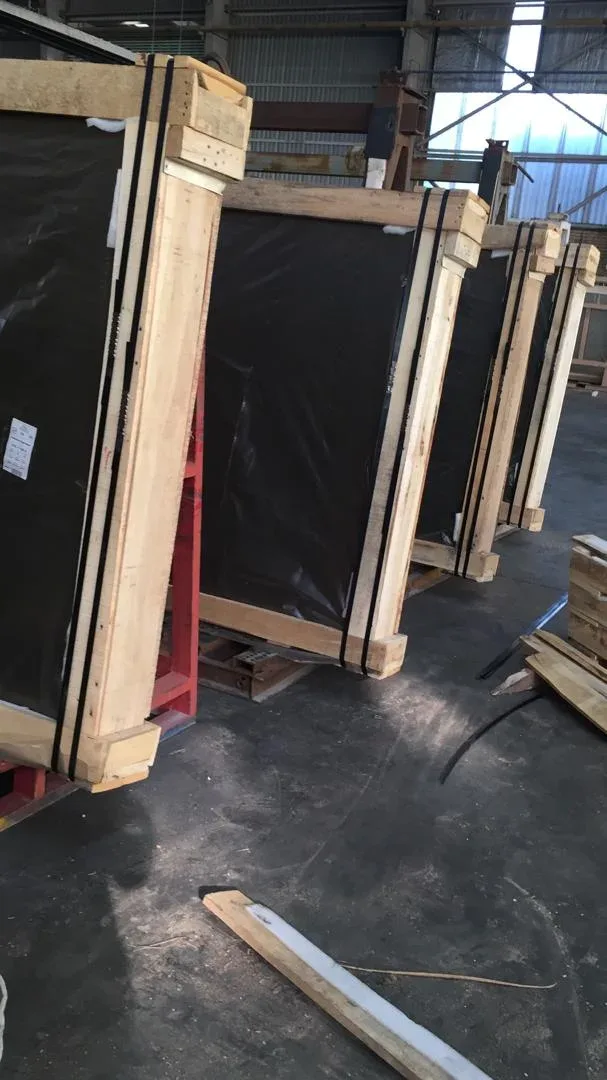
- Container packaging: heavy-duty end-cap timber crates, desiccants, and moisture-resistant interleaving powder.
Frequently asked questions
Can body-tinted glass be combined with reflective coatings?
Yes. Applying an online pyrolytic or offline sputtered reflective coating onto a body-tinted glass substrate combines deep absorption with high surface reflectance, achieving extremely low solar heat gain coefficients ideal for intense tropical climates.
Does tinted glass require tempering to prevent thermal breakage?
Dark gray, bronze, and green tints exposed to partial facade shading or high solar irradiance frequently experience thermal differentials exceeding thirty degrees Celsius, making heat-strengthening or tempering strongly advisable.
How do reflective coatings affect bird collisions?
High exterior reflectance creates mirror-like reflections of sky and surrounding vegetation, increasing bird impact risk unless combined with visible etched patterns, ceramic frit dots, or specialized UV-reflective markers.
What is the lifespan of online pyrolytic reflective coatings?
Because pyrolytic coatings are fused into the silica matrix during hot float production, their operational lifespan matches the durable glass substrate itself when cleaned with non-abrasive detergents.
What is the difference between hard coat and soft coat reflective glass?
Hard coat glass features a pyrolytic metal-oxide layer applied during float manufacturing that is highly durable and can be glazed monolithically. Soft coat glass uses magnetron sputtering in a vacuum chamber, offering superior thermal performance but requiring an insulating glass unit cavity to protect the delicate coating from oxidation.
Sources
- ISO 9050: Glass in building — Determination of light transmittance, solar direct transmittance, and related glazing factors — International Organization for Standardization
- EN 410: Glass in building — Determination of luminous and solar characteristics of glazing — European Committee for Standardization