
In modern architectural glazing and luxury interior design, selecting between standard clear float glass and low-iron ultra-clear glass is a pivotal decision governing visual transparency and color fidelity. While standard clear glass possesses an inherent greenish tint caused by ferric oxide impurities, ultra-clear glass undergoes specialized raw material beneficiation to eliminate color distortion. This guide explains the metallurgical differences, optical transmission values, and commercial selection criteria.
The Role of Ferric Oxide Impurities in Standard Float Glass
Standard clear float glass is manufactured from natural silica sand containing minor mineral impurities, primarily iron in the form of ferric oxide (Fe2O3). In standard float glass, iron oxide concentrations typically range between five hundred and one thousand parts per million. While single thin panes appear largely transparent when viewed from the front, this iron content absorbs portions of the visible spectrum.
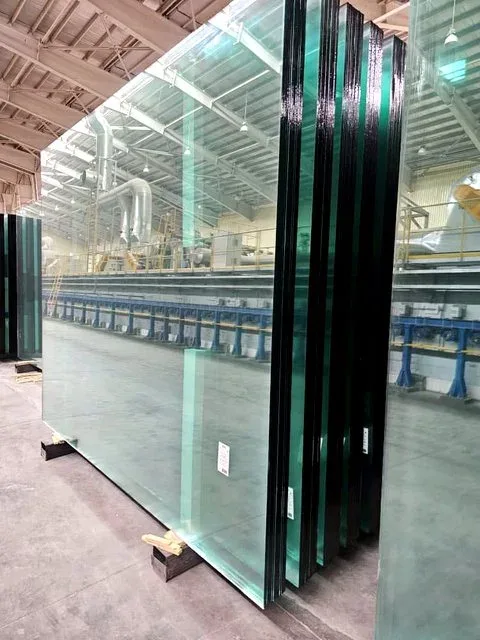
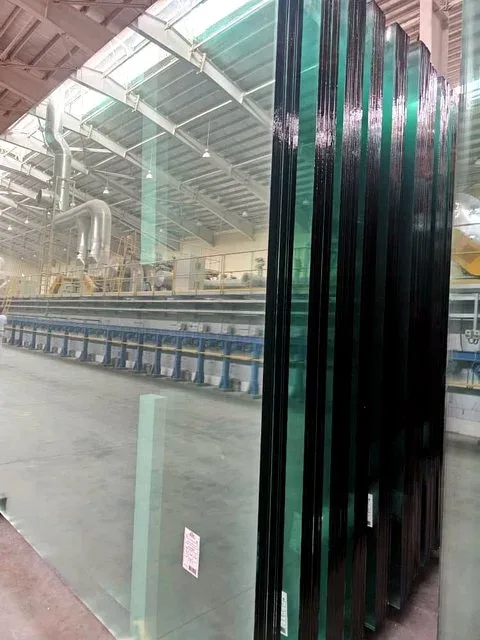
The effect of iron becomes immediately apparent when looking through the edge of the glass, revealing a pronounced deep green hue. When glass thickness increases or when multiple panes are laminated together, this green tint darkens significantly, shifting the color of daylight entering a building. Explore our primary float glass and ultra-clear glass hubs.
Chemical Formulation and Melting of Low-Iron Silica Sand
Ultra-clear float glass, frequently referred to in specifications as low-iron or extra-clear glass, is produced using high-purity silica sand that has undergone extensive magnetic separation and chemical washing. The iron content is rigorously reduced to below one hundred parts per million—less than one-tenth of standard float levels.
Melting low-iron batch formulations requires carefully calibrated furnace operations. Because low-iron glass contains less iron to absorb infrared radiation within the molten tank, radiant heat penetrates deeper into the molten bath, requiring adjusted burner profiles and refractory insulation to maintain pristine thermal stability.
Edge Color Differences and Multi-Laminated Clarity Performance
The most visible architectural difference between standard clear and ultra-clear glass is the edge aesthetic. Where standard float glass displays a dark bottle-green edge, ultra-clear glass exhibits a crisp, jewel-like azure or ice-blue edge with virtually zero dark absorption.
This optical clarity becomes indispensable in multi-laminated glass assemblies, such as heavy structural glass balustrades, staircase treads, and aquarium viewing walls. Laminating three or four plies of standard float glass compounds the green tint, creating a murky, dark green barrier. Low-iron glass maintains pristine optical transparency regardless of overall laminate thickness.
Solar Energy Transmittance and Photovoltaic Applications
Beyond visual aesthetics, the low iron content significantly boosts total solar energy transmittance (Tsol). Standard clear float glass absorbs a measurable portion of shortwave infrared energy, whereas low-iron glass achieves solar direct transmittance exceeding ninety percent.
This high solar permeability makes ultra-clear glass the premier choice for solar thermal collectors, building-integrated photovoltaics (BIPV), and commercial greenhouse envelopes, where maximizing photon transmission translates directly into higher electricity output and accelerated agricultural growth rates.

Optical Transmission and Color Rendering Comparison
A quantitative comparison across optical metrics illustrates the clarity advantage of low-iron formulations.
| Standard Clear Float (6mm Substrate) | Ultra-Clear Low-Iron Float (6mm Substrate) | |
|---|---|---|
| Iron Oxide Content (Fe2O3) | Approx. 500 to 1000 ppm (0.05% to 0.10%) | Below 100 ppm (Under 0.01%) |
| Visible Light Transmittance (VLT) | 88% to 90% | 91% to 92% |
| Solar Direct Transmittance (Tsol) | 81% to 83% | 89% to 91% |
| Color Rendering Index (Ra / CRI) | 97 to 98 | Exceeds 99 (True daylight fidelity) |
| Edge Appearance | Deep bottle green | Brilliant azure / ice-blue clear |
| Multi-Layer Lamination Impact | Noticeable darkening and green hue accumulation | Pristine neutral clarity maintained across multiple plies |
High-End Retail Displays, Museum Vitrines, and Color Fidelity
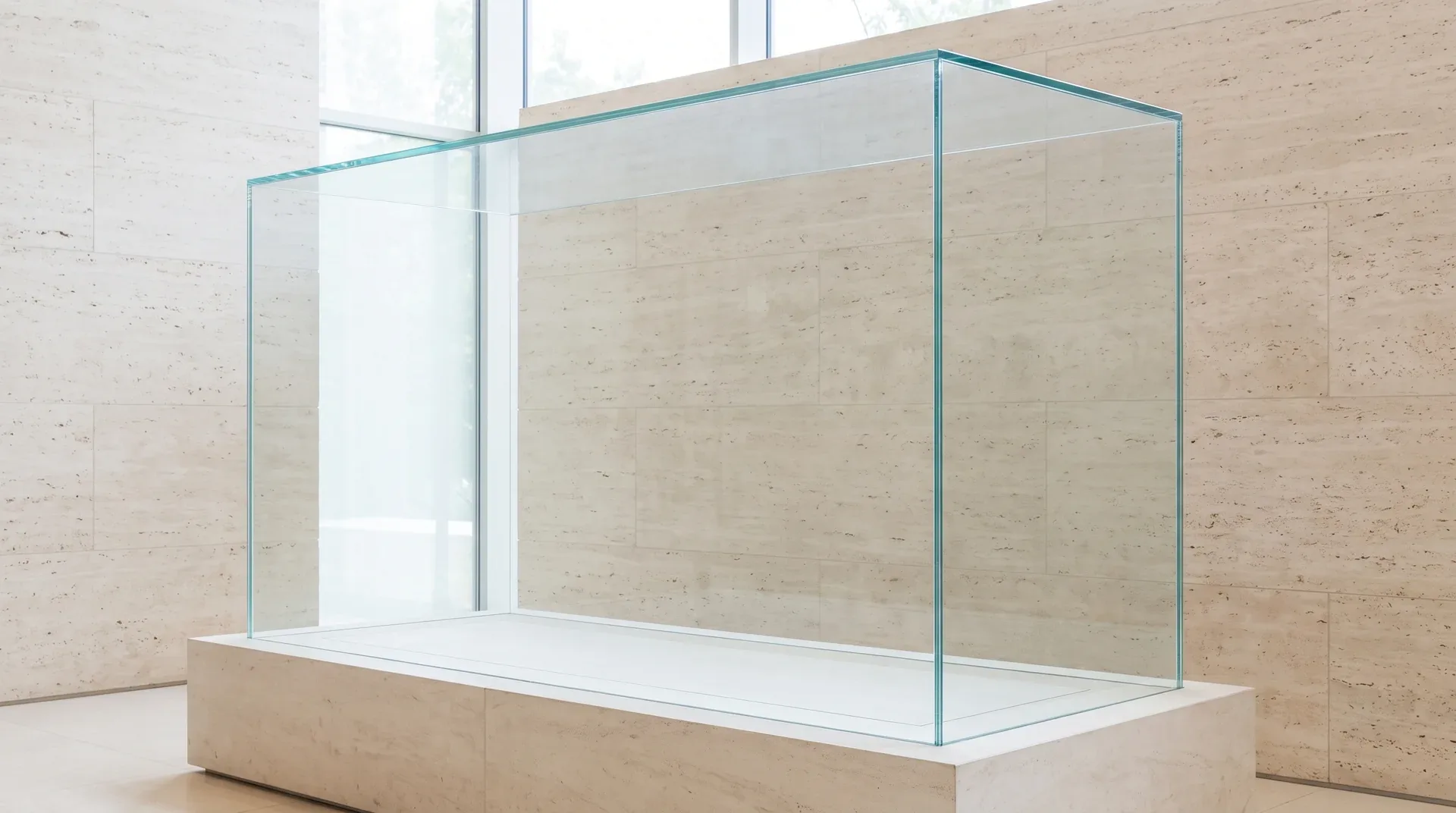
In luxury retail storefronts, jewelry showcases, and museum vitrines, true color fidelity is paramount. Standard float glass alters the chromatic perception of displayed goods, muting vibrant reds, whites, and yellows under interior spotlights.
By achieving a Color Rendering Index exceeding ninety-nine, ultra-clear glass ensures that fabrics, paintings, and precious stones are perceived exactly as their creators intended. When combined with anti-reflective magnetron coatings, ultra-clear glass creates an almost invisible boundary between the viewer and the artifact.
Handling, Cutting, and Edge Micro-Crack Prevention
Processing low-iron ultra-clear glass requires identical cutting wheel pressures and scoring speeds as standard float glass, but edge inspection demands heightened vigilance. Because low-iron glass is predominantly specified for exposed-edge applications—such as frameless shower doors, glass fins, and structural balustrades—any edge chipping or micro-flaws will be immediately noticeable.
Fabricators should utilize CNC diamond edging wheels with abundant water coolant, followed by multi-stage cerium oxide polishing to produce a brilliant, optically clear edge finish. Proper edge arrissing removes micro-flaws, ensuring maximum mechanical tensile resistance under wind and live pedestrian loads.
Procurement Specification and Tender Requirements
When preparing procurement specifications for low-iron glass, specify exact iron oxide thresholds and optical transmission values rather than relying on generic trade names. Submit your container requirements via our RFQ portal for verified mill certificates.
- Specify maximum allowable ferric oxide content (e.g. Fe2O3 under 120 ppm).
- Define minimum visible light transmittance (VLT minimum 91% on 6mm substrate).
- Specify substrate dimensions: standard 2140x3300mm or jumbo 2440x3660mm stock.
- State fabrication scope: raw annealed export cases versus cut-to-size tempered panels.
- Interleaving protection: moisture-resistant powder to prevent transit staining.
- Packaging: heavy-duty timber end-caps reinforced with steel banding.
Frequently asked questions
Why does standard float glass look green at the edge?
The green edge color is caused by trace amounts of ferric oxide (iron) present in the silica sand used in standard glass batch formulations. When looking through the edge, light traverses a long optical path length, concentrating the green absorption.
Can ultra-clear glass be tempered and laminated like standard glass?
Yes. Ultra-clear low-iron glass has identical mechanical and physical properties to standard float glass and can be cut, edged, tempered, curved, and laminated using the same standard processing equipment.
Is low-iron glass more prone to scratching than clear glass?
No. The surface hardness and scratch resistance of low-iron glass are virtually identical to standard soda-lime float glass, with a Mohs hardness rating of approximately 5.5 to 6.0.
Does low-iron glass improve thermal insulation (U-value)?
No. U-value is governed by thermal conduction and long-wave infrared radiation, which depends on pane spacing, gas fills, and low-emissivity coatings rather than iron content.
When is low-iron glass strictly necessary in architectural design?
Low-iron glass is strongly recommended for thick multi-laminated glass assemblies, back-painted white glass panels, museum display vitrines, luxury retail display windows, and photovoltaic modules.
Sources
- EN 572-2: Glass in building — Basic soda lime silicate glass products — Part 2: Float glass — European Committee for Standardization
- ISO 9050: Glass in building — Determination of light transmittance, solar direct transmittance, and related glazing factors — International Organization for Standardization