
Patterned glass, also known as figured or rolled decorative glass, offers a balance between natural daylight transmission and visual privacy. Manufactured by passing molten glass through textured rollers, it creates geometric or organic surface reliefs that scatter light. This guide assists architectural specifiers and glass importers in selecting the right pattern, understanding obscurity ratings, and specifying processing requirements.
Understanding Patterned and Figured Glass Manufacturing
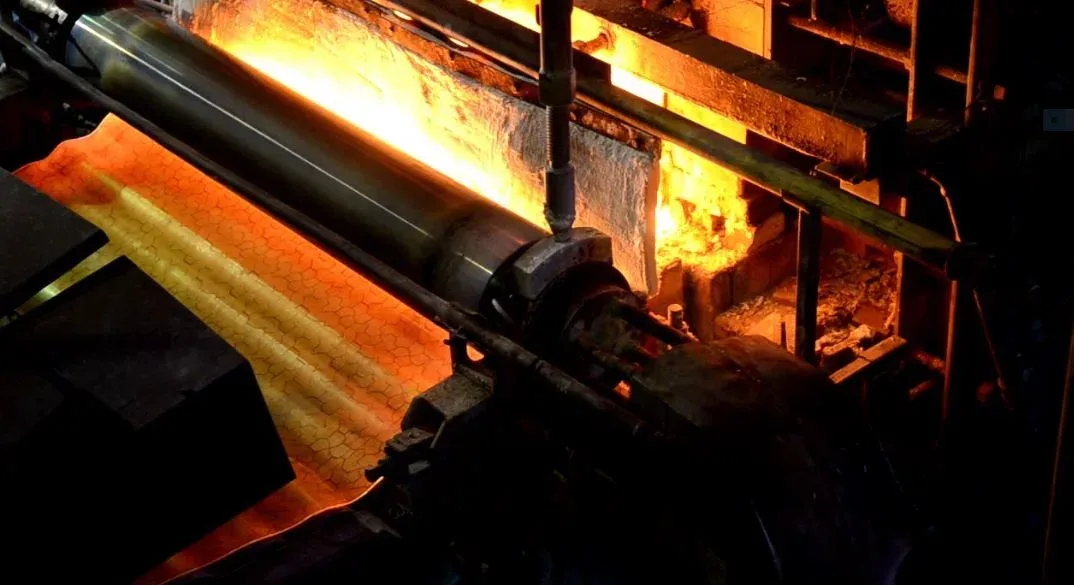
Patterned glass is manufactured using a specialized continuous rolling production process that differs substantially from traditional tin-bath float glass manufacturing. Molten glass leaves the melting furnace at temperatures exceeding one thousand degrees Celsius and flows continuously between two water-cooled counter-rotating steel rollers. One or both of these heavy rollers feature an intricately engraved negative relief of the desired decorative pattern. As the cooling viscous glass ribbon passes through the mechanical nip point between the rollers, the texture is permanently embossed into the glass surface before entering the continuous annealing lehr.
Unlike float glass, which yields an optically flat, parallel surface across both faces, patterned glass deliberately introduces controlled surface topography and relief variations. The resulting three-dimensional micro-structures and ridges refract, disperse, and scatter transmitted light rays in multiple directions. For complete technical parameters across our standard figured portfolio, explore our patterned glass product hub.
Evaluating Obscurity and Privacy Levels Across Patterns
Visual privacy in decorative architectural glazing is governed by optical distortion rather than total light blockage. Most commercial patterned glass designs transmit between seventy-five and eighty-eight percent of incident visible light, ensuring interior spaces remain bright and naturally illuminated while preventing clear line-of-sight identification of occupants, sensitive documents, or private interior furnishings.
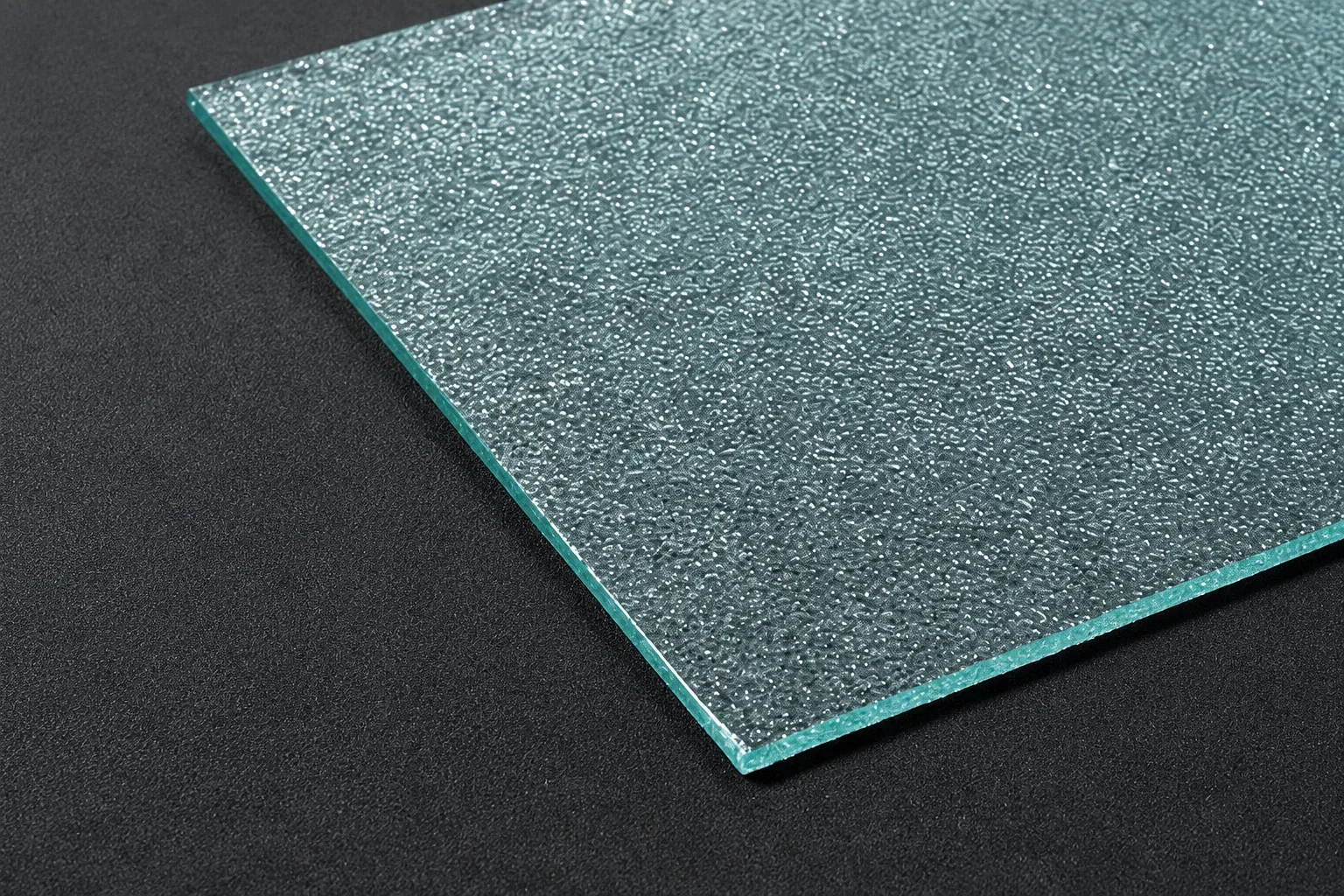
The international glazing industry evaluates obscurity on a functional gradient ranging from low visual obscuration to maximum distortion. Shallow geometric textures provide mild obscuration where distant objects remain recognizable as general shapes and movements, whereas deep, dense organic textures like Chinchilla or Flemish completely dissolve outlines into soft, diffused color gradients even when viewed from very close proximity.
Popular Architectural Textures and Light Diffusion Behavior
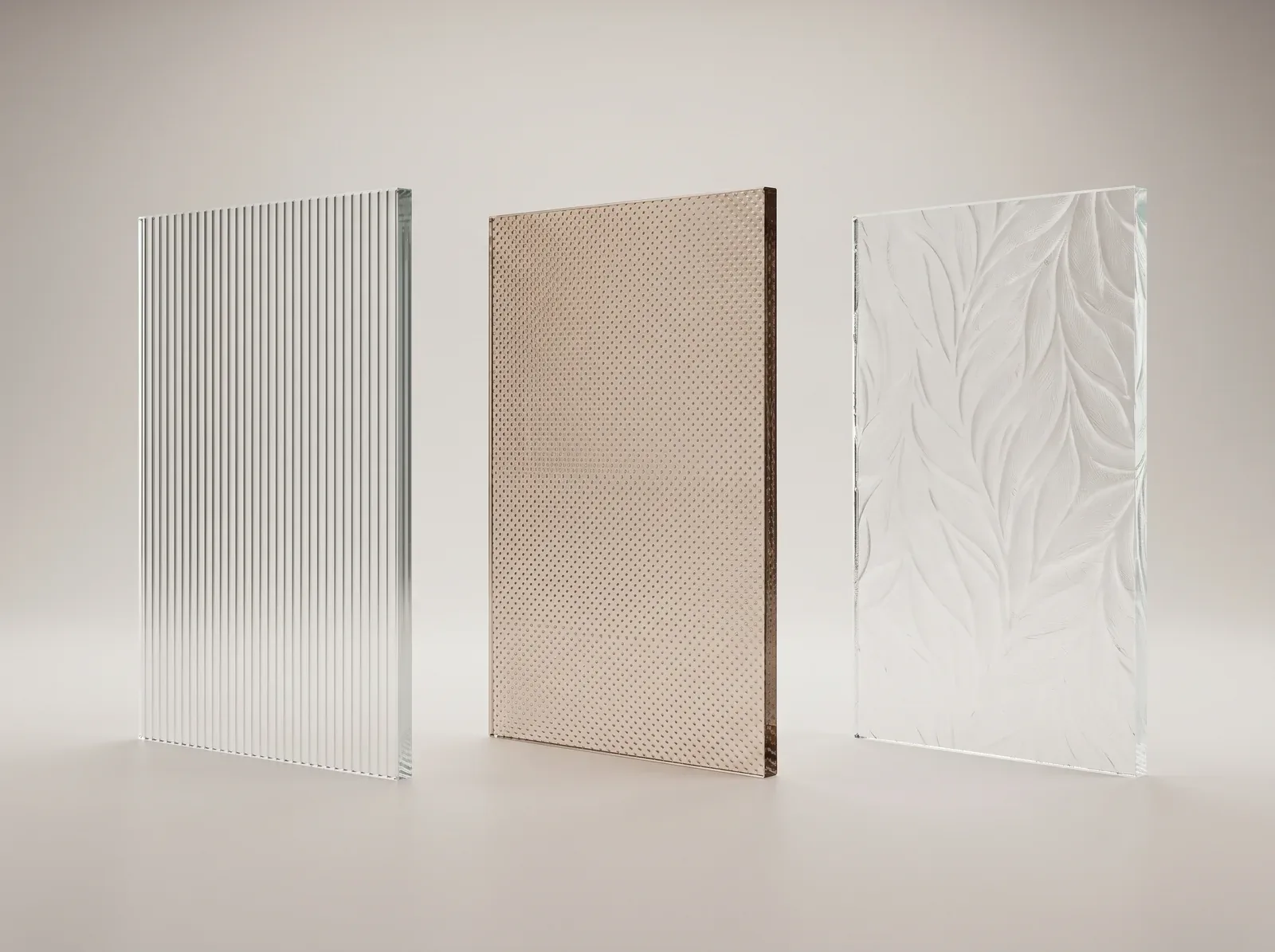
Specifiers typically select patterned glass based on architectural style and privacy needs. Contemporary interior design strongly favors directional linear patterns such as reeded or fluted textures for commercial partitions, while traditional and residential installations favor multidirectional organic reliefs.
| Relief Style | Relative Obscurity | Typical Applications | |
|---|---|---|---|
| Reeded / Fluted | Linear parallel ridges (12.7mm or fine) | Moderate to High (Directional) | Office partitions, shower screens, cabinetry |
| Chinchilla | Fine stippled organic texture | High | Bathroom glazing, privacy screens |
| Flora / Daisy | Floral decorative relief | High | Entry doors, decorative window inserts |
| Karatachi | Geometric textured mesh | Maximum | Healthcare privacy windows, institutional doors |
| Diamond / Cross Reeded | Intersecting geometric grid | High | Industrial furniture, balustrade infill panels |
Each pattern interacts uniquely with both artificial light and daylight. Directional textures such as reeded glass create striking visual elongation along ceiling heights, while multidirectional stippled textures eliminate all directional orientation constraints during framing.
Cutting, Edge Work, and Thermal Treatment Restrictions
Fabricating patterned glass requires experienced cutting technicians and calibrated cutting machinery. Hand-scoring or automated CNC cutting must be performed exclusively on the smooth, non-textured face of the sheet. Scoring on the patterned face causes the cutting wheel to bounce across the undulating ridges, producing irregular breakout fractures, ragged edges, and ruined glass sheets.
Most patterned glass thicknesses of 4mm and 5mm can be tempered for safety applications, provided the furnace heating cycle is carefully tuned. Because the relief profile causes variable glass thickness across the sheet cross-section, heating times must prevent optical warping while achieving required surface compression.
Lamination Considerations for Patterned and Fluted Glass
When architectural building codes require laminated safety glass for overhead canopies, glass balustrades, or acoustic partitions, laminating patterned glass presents specific manufacturing requirements. When a textured face is laminated against an interlayer, the polymer resin must completely melt and flow into every microscopic groove and valley of the embossed pattern to displace ambient air.
Standard 0.38mm PVB interlayers are insufficient for deeply textured patterns like 12.7mm reeded or heavy hammered glass. Specifiers and fabricators must specify thicker interlayers—such as 0.76mm, 1.14mm, or specialized acoustic PVB formulations—and apply calibrated vacuum de-airing cycles during the pre-lamination stage before final autoclave consolidation to eliminate trapped air bubbles along pattern valleys.
Framing Orientation and Surface Face Selection
Proper glazing orientation depends on the installation environment. For exterior windows, the smooth surface is typically installed facing outward to simplify window cleaning, while the textured face faces the interior. In humid areas like shower enclosures, the smooth face should face the wet side to prevent soap scum and mineral deposits from accumulating inside the embossed grooves.
Where consistent uniform opacity without directional grooves is desired, architects often compare patterned textures against chemically frosted options. For a thorough comparison of surface mechanics, consult our patterned vs satin glass analysis.

Sample Matching, Master Tile Approval, and Visual Inspection Standards
Because patterned glass is formed by physical engraving rollers that experience subtle wear over long production runs, minor variations in pattern depth and ridge sharpness can occur between different factory campaigns. For commercial projects requiring visual continuity across hundreds of square meters, obtaining and approving a physical master sample tile prior to container production is essential.
Quality inspection should be conducted viewing the glass perpendicularly at a distance of approximately two meters under diffused ambient daylight or standardized five-hundred-lux artificial illumination. Inspectors should verify that the embossed pattern displays sharp definition, uniform relief depth, and freedom from roll-stop marks, cold glass laps, or surface blister inclusions.
Commercial Procurement and Container Packing Requirements
When ordering patterned glass by full container load, packaging integrity is paramount. Because the embossed surface creates localized contact points between adjacent panes, premium interleaving paper or specialized moisture-resistant powder must be applied to prevent vibration abrasions during ocean transit.
- Specify exact pattern trade name and master sample visual approval.
- Nominal sheet thickness (typically 4mm, 5mm, or 6mm depending on pattern depth).
- Standard export case dimensions: 1830x2440mm, 2000x2440mm, or custom cut sizes.
- Directional pattern orientation relative to sheet length (crucial for reeded glass).
- Wooden crate type: closed seaworthy timber cases with steel strap reinforcement.
- Direct RFQ submission through our online RFQ procurement portal.
Frequently asked questions
Can all patterned glass designs be tempered?
Most standard patterns in 4mm to 6mm thickness can be fully tempered to meet safety glass standards. However, extremely deep relief patterns with sharp cross-sectional variations require trial tempering to ensure uniform stress distribution.
Which side of patterned glass should face the exterior?
In exterior window assemblies, the smooth face should face the exterior environment to facilitate regular washing and prevent atmospheric dirt accumulation in the pattern grooves.
How does patterned glass compare to frosted glass for light transmission?
Patterned glass generally transmits higher levels of visible light (75% to 88%) compared to frosted or sandblasted glass, as it refracts light through clear glass contours rather than creating an opaque microscopic frosted barrier.
Can patterned glass be laminated with PVB interlayers?
Yes, but the textured surface requires thicker PVB interlayers (such as 0.76mm or 1.14mm) to completely flow into and encapsulate the relief profile without trapping air bubbles during autoclave processing.
How do you clean dirt buildup in deeply embossed patterned glass?
For textured surfaces with stubborn mineral deposits or grime, use a soft bristle brush with warm water and neutral glass cleaner. Avoid harsh abrasive scouring powders or metal scrapers that can permanently scratch the glass skin.
Sources
- EN 572-5: Glass in building — Basic soda lime silicate glass products — Part 5: Patterned glass — European Committee for Standardization
- ASTM C1036: Standard Specification for Flat Glass (Patterned and Wired Categories) — ASTM International