
Laminated glass combines two or more glass plies with an interlayer that can retain fragments after breakage. The remaining barrier performance depends on the specified build-up, support, loads and damage conditions; it must be checked for the intended application.
What Laminated Glass Is
Laminated glass is not a single, monolithic sheet of material; it is a composite structure engineered to provide safety, security, and structural integrity. At its core, the product consists of multiple layers of glass bonded together under controlled heat and pressure. This manufacturing process transforms individual, brittle panes into a unified optical element that behaves fundamentally differently when subjected to mechanical stress.
For importers, distributors and processors, this composite structure matters for specification and handling. Unlike monolithic float glass, a laminated panel can retain fragments after a ply breaks. Retention in the frame and residual load capacity depend on the whole installed assembly, not on lamination alone.
The versatility of the product allows it to be combined with various glass types, including annealed, heat-strengthened, or fully tempered plies, depending on the required load-bearing capacity and safety objectives. Procurement teams sourcing Laminated glass must evaluate the specific build-up to ensure it aligns with the structural demands and environmental conditions of the final installation.
Anatomy: Panes and the Interlayer
The structural anatomy of laminated glass relies on two primary components: the rigid glass plies and the flexible polymer interlayer. The glass plies provide the compressive strength, surface hardness, and optical clarity, while the interlayer provides tensile strength, adhesion, and energy absorption. The synergy between these materials dictates the final performance of the panel.
The interlayer is the critical differentiator in laminated safety glass. It is a viscoelastic polymer sheet placed between the glass plies before the assembly enters an autoclave. During the autoclave cycle, elevated temperatures and high pressure force the polymer to flow and bond intimately with the glass surfaces, creating a permanent, optically clear adhesion.
Interlayer material and thickness can affect stiffness, acoustic behavior and post-breakage performance. Those effects depend on the full glass build-up and loading conditions; thicker interlayers do not by themselves establish a structural, acoustic or security rating. Request evidence for the specified assembly.
How It Behaves When It Breaks
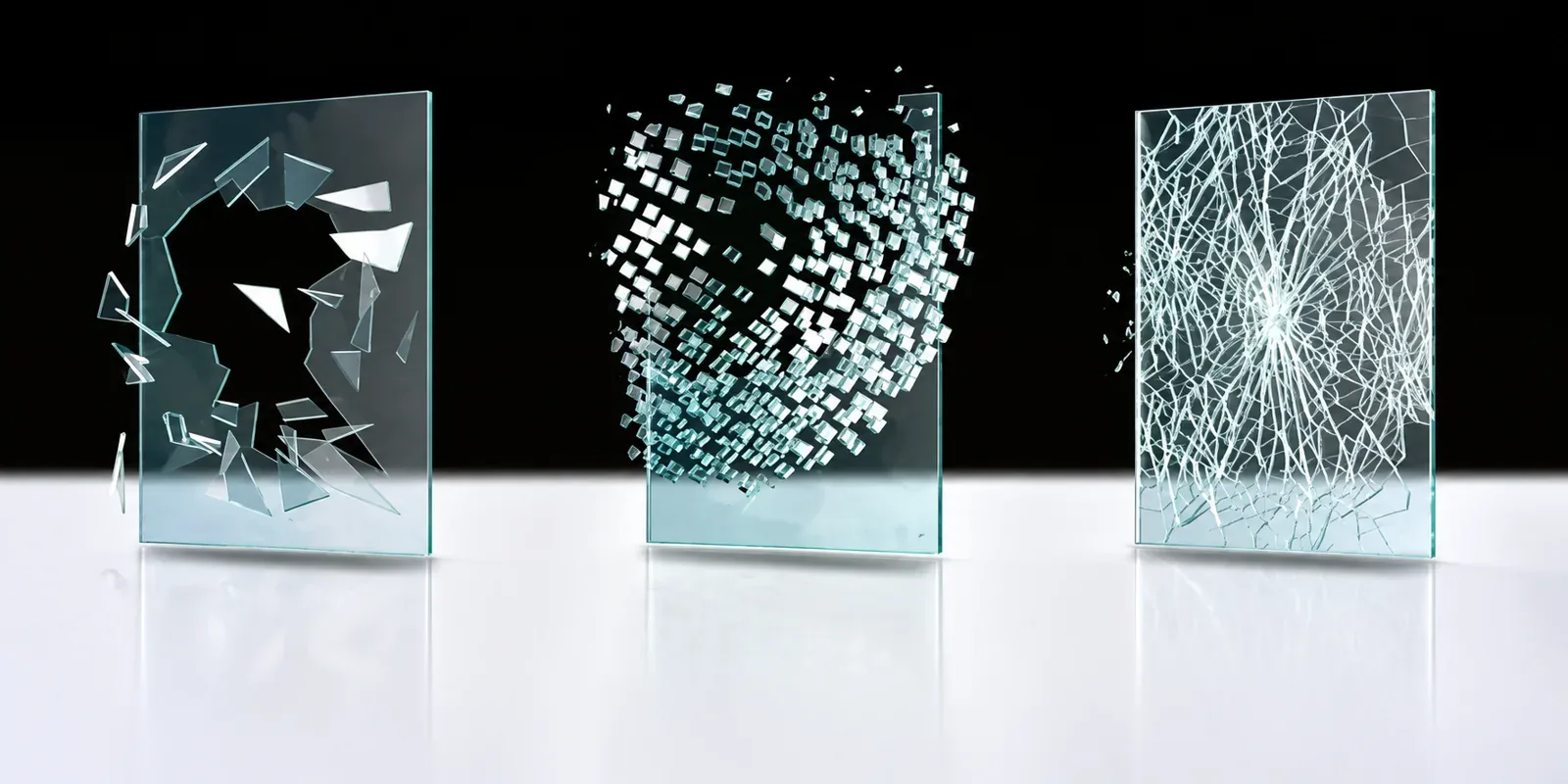
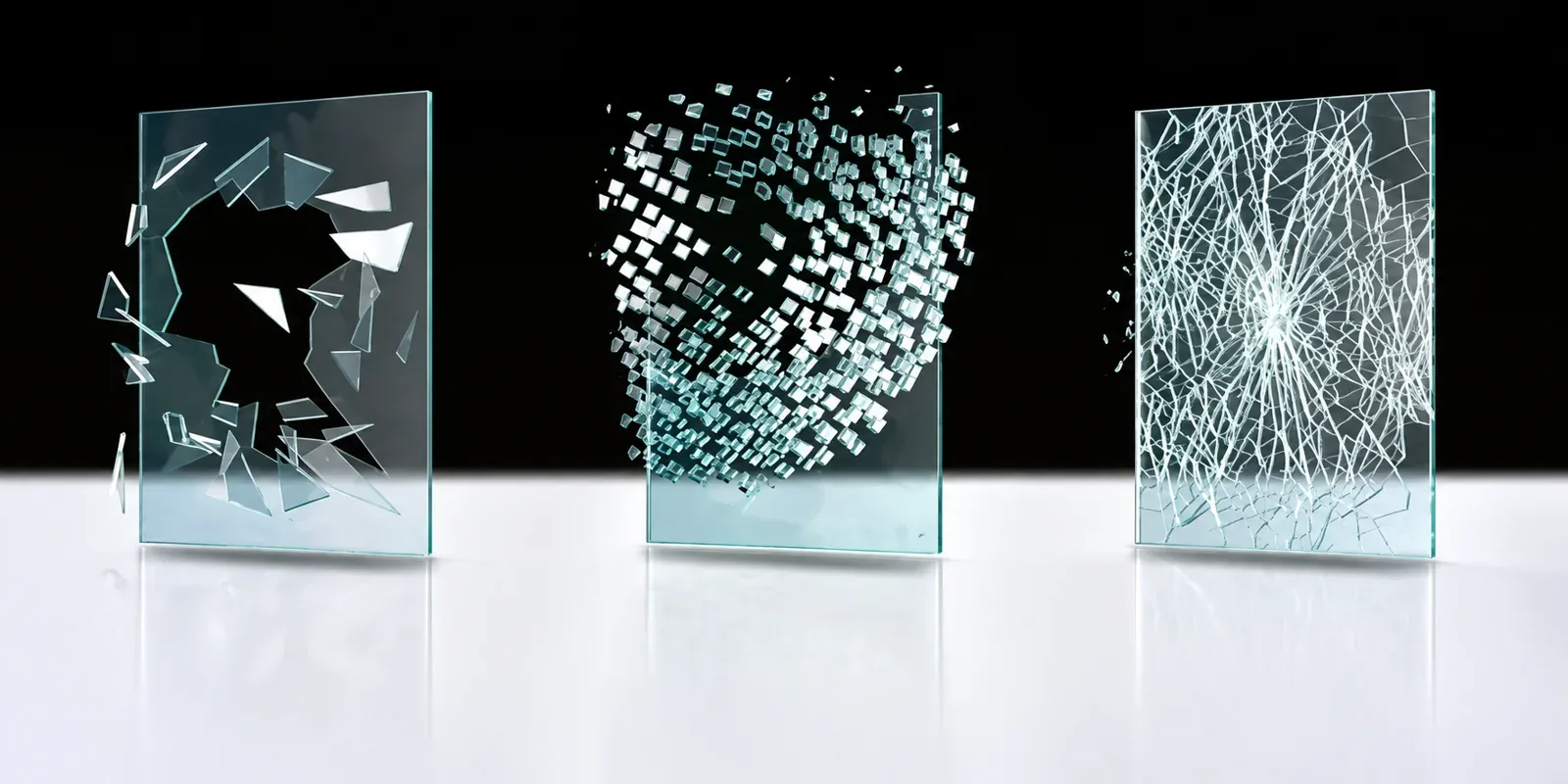
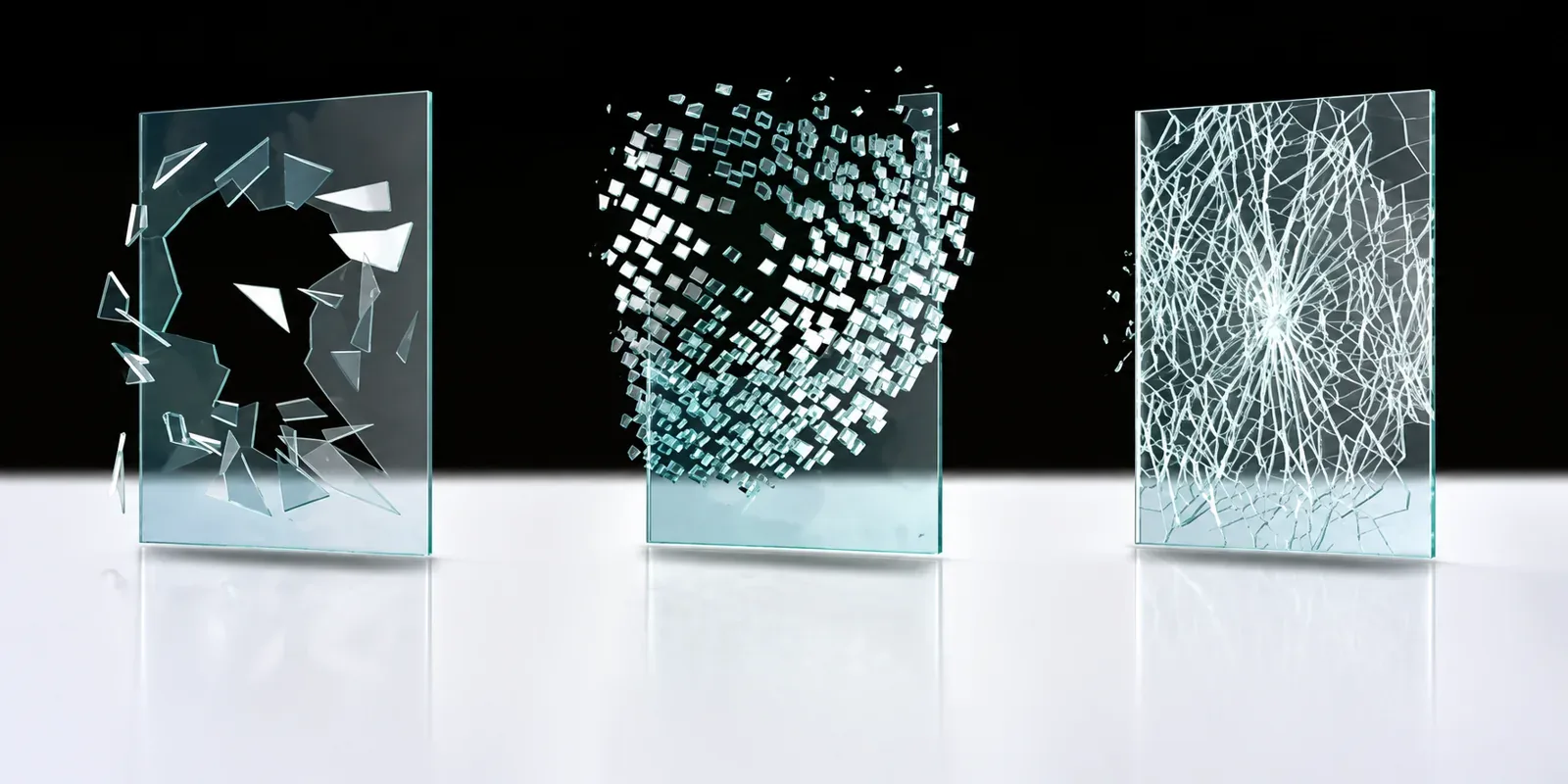
Monolithic annealed and fully tempered glass break differently from laminated constructions. Broken fragments may leave an opening or remain partly supported depending on the glass and frame. The relevant risk is the behavior of the complete assembly after the specified breakage event.
Fully tempered glass generally breaks into relatively small fragments. A monolithic pane may then lose its barrier function; whether fragments remain in the frame depends on the installation. Compare the two material choices in our laminated versus tempered glass guide.
After a laminated ply cracks, the interlayer can hold fragments and reduce falling debris. The extent and duration of any remaining barrier against weather, loads or intrusion depend on the interlayer, glass plies, framing and damage. Do not assume a broken panel continues to meet its original design duty without assembly-specific evidence.
Where Laminated Glass Is Specified
Safety-glass requirements for human impact, overhead glazing and fall protection depend on the jurisdiction and installation. Laminated construction is often considered where fragment retention is needed, but the required class, support and post-breakage performance must be confirmed for the project.
For balustrades and guardrails, the glass and its supports must be assessed as a complete fall-protection system. An interlayer may improve fragment retention after breakage, but it does not by itself guarantee that the barrier remains in place or prevents a fall. The same project-specific approach applies to exposed facades and storefronts.
Multi-ply laminated constructions can be designed for security applications. Resistance to forced entry or ballistic threats requires a defined threat level, complete assembly and relevant test evidence; ply count or interlayer thickness alone does not establish a rating.
Choosing a Build-Up: Ply Configuration and Thickness
Specifying the correct build-up requires balancing structural loads, safety requirements, and acoustic performance. The overall configuration is defined by the number of glass plies, the individual thickness of each ply, and the type and thickness of the interlayer. Procurement teams must review the specific options available to match project requirements.
Symmetric and asymmetric build-ups offer different design options. Their load, acoustic and optical behavior depends on the complete configuration and support conditions. Compare tested or calculated performance for the intended application rather than treating one arrangement as universally stronger or quieter.
| What to verify | Possible context | |
|---|---|---|
| Symmetric Build | Ply sizes, interlayer and assembly performance | Project-specific safety or facade glazing |
| Asymmetric Build | Tested acoustic and structural behavior | Projects with acoustic or load requirements |
| Multi-Ply Build | Complete assembly and any security test rating | Projects with a defined security requirement |
When evaluating options, buyers should consult comprehensive guides on How to choose glass type and thickness for your project to ensure the selected build-up aligns with local wind load calculations and structural engineering requirements.
Cutting, Handling and Packing for Export
Export handling should protect glass surfaces and exposed laminate edges from damage. Moisture exposure and sealant compatibility depend on the interlayer and glazing detail; no universal edge-sealing method is established here. Agree on the applicable handling and storage requirements for the ordered product.
Cutting and edge processing depend on the laminated build-up and available equipment. Specify final dimensions, holes and edge requirements on approved drawings and confirm the processing sequence with the supplier. Do not assume that every cut edge needs immediate sealing or that a finished laminate can always be modified.
Packaging is selected for the order’s size, geometry and handling route. Confirm the agreed crate or rack design, restraints, unloading method and inspection process before shipment; this guide does not establish a universal supplier packing specification.
Frequently asked questions
Can laminated glass be cut to size after it is manufactured?
Some laminated build-ups can be cut with suitable equipment, but available processing depends on the glass, interlayer and edge requirement. Confirm the final dimensions and processing sequence with the supplier; do not assume that cutting after lamination is suitable for every product.
Does the polymer interlayer degrade when exposed to sunlight over time?
Weathering and ultraviolet performance depend on the selected interlayer, glass build-up and exposure. Request product data for the proposed configuration. Exposed edges and sealants should be detailed for that material; no universal edge-sealing rule is established here.
Is a laminated panel heavier than a monolithic pane of the same overall thickness?
Weight depends on the individual glass plies and interlayer, not on the label laminated or monolithic alone. Calculate the actual mass of the specified build-up and include it in the framing and handling design.
Can laminated glass be combined with low-emissivity coatings for thermal insulation?
Laminated glass can be incorporated into a glazing unit with a suitable low-emissivity coating. Coating location, compatibility and thermal performance depend on the complete build-up and should be confirmed with the supplier.
Why would a specifier choose an asymmetric build-up over a symmetric one?
Different ply thicknesses can change acoustic and structural behavior, but improvement is not automatic. Compare tested or calculated results for the proposed asymmetric and symmetric build-ups.