
Tempered glass generally fragments into smaller pieces, while a laminated interlayer can retain broken fragments. Selection depends on the installed system, local safety requirements and any required performance after breakage.
The Short Answer: Core Differences in Safety Glass
When specifying safety glass for architectural or commercial projects, procurement teams and fabricators must choose between two primary options: laminated and tempered glass. While both are designed to mitigate the risk of injury compared to standard annealed glass, they achieve this through fundamentally different mechanisms. The difference between laminated and tempered glass ultimately comes down to their failure modes. Tempered glass is engineered to break safely into small, relatively harmless pieces, eliminating the danger of large, sharp shards. Laminated glass, conversely, is designed to remain intact even after the glass plies fracture, maintaining a physical barrier. Understanding whether a project prioritizes safe fragmentation or post-breakage retention is the first step in selecting the right material.
Manufacturing Processes: How Each Glass Type is Made
The production methods for these two materials dictate their final physical properties. Tempered glass undergoes a thermal toughening process. The raw glass is heated to a very high temperature and then rapidly cooled with high-pressure air. This rapid quenching forces the outer surfaces to cool and contract faster than the center, creating a state of high surface compression and interior tension. This stress profile is what gives the glass its enhanced strength and unique breakage pattern.
Laminated glass is a composite material. It is constructed by bonding two or more plies of glass together with a flexible plastic interlayer. The assembly is subjected to heat and pressure in an autoclave, which fuses the layers into a single, cohesive unit.
The interlayer can hold broken fragments, but residual strength and retention depend on the full laminated assembly. For manufacturing details, see the laminated glass guide.
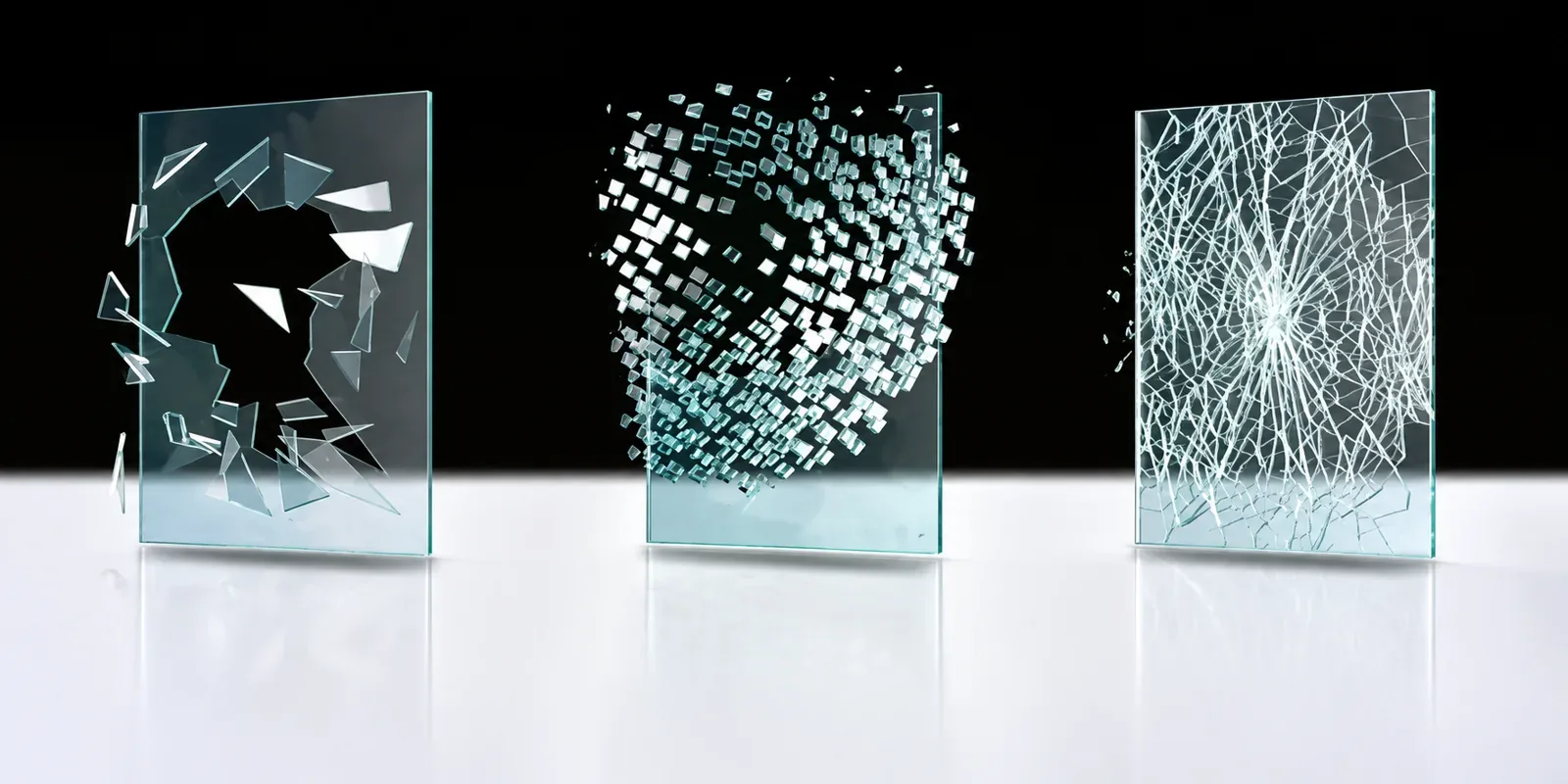
Breakage Behavior: How Laminated and Tempered Glass Fail
When fully tempered glass breaks, stored stress releases and the pane generally fragments into relatively small pieces. This may reduce some laceration risks but does not make injury impossible. The pane may lose its barrier function; whether fragments remain in the opening depends on the framing and installation.
In laminated glass, broken fragments can adhere to the interlayer. Whether the panel remains in the frame and continues to resist loads depends on the glass, interlayer, supports and damage scenario. Where post-breakage protection is required, assess the complete assembly.
Fabrication and Processing: Cutting, Drilling, and Edging
A critical trade-off in the difference between laminated and tempered glass lies in how they can be processed. Because of the intense internal stresses created during the thermal toughening process, tempered glass cannot be cut, drilled, or edged after it leaves the furnace. Any attempt to alter its shape will cause it to shatter instantly. Therefore, all fabrication—including cutting to size, drilling holes for hardware, and edge polishing—must be completed while the glass is still in its annealed state.
Laminated glass offers much greater flexibility in the fabrication shop. While the individual glass plies are usually cut and edged before lamination, the final laminated block can be trimmed, and minor adjustments can be made using specialized diamond saws that cut through both the glass and the interlayer simultaneously. This makes laminated glass more forgiving for on-site adjustments or complex custom shapes that are difficult to perfect before the bonding process. For more details on processing limits, see our article on tempered glass.
Combining the Two: Laminated Tempered Glass
Tempered plies can be laminated when a project needs both their pre-breakage properties and fragment retention. Overhead glazing, balustrades and sloped glazing require a project-specific assessment of impact, fall-out and residual performance; combining the two processes does not create an automatic safety guarantee.
Tempered plies can improve initial performance for some loads, while an interlayer may hold fragments after breakage. The remaining barrier and its duration must be verified for the specified build-up and fixing system.
Application Trade-offs: Where Each Type Excels and Falls Short
Tempering generally improves resistance to thermal stress compared with equivalent annealed glass. Suitability for a location still depends on the pane, shading, edge condition, support and temperature pattern; no universal thermal rating is stated here.
Laminated constructions can be designed for acoustic, UV or security performance, but the result depends on the specific plies, interlayer and complete glazing system. Request test results for the proposed build-up; an ordinary interlayer is not proof of a particular rating.
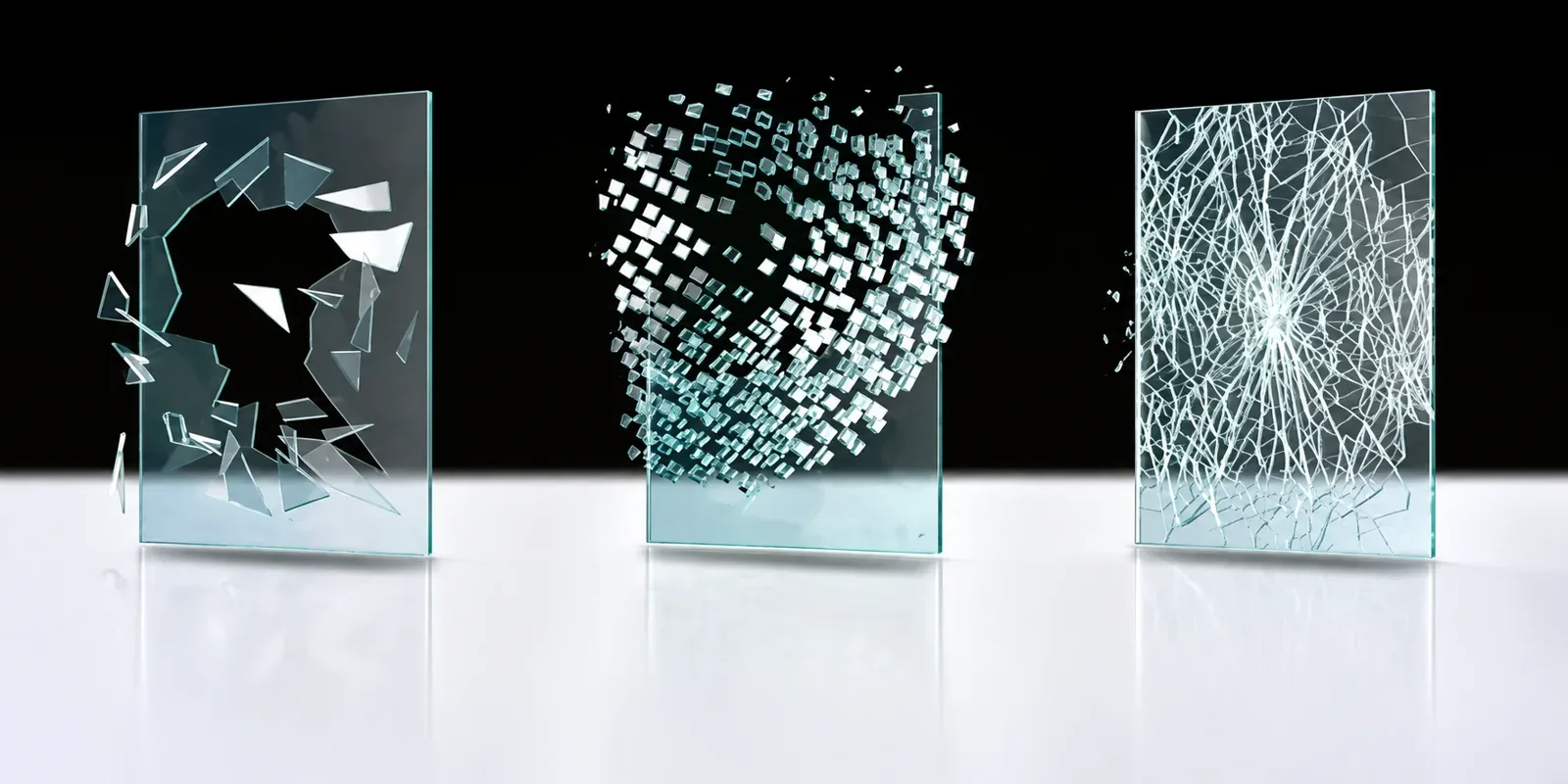
Quick Comparison Table
The following table summarizes the primary differences to assist procurement teams and specifiers in making rapid comparisons.
| Tempered Glass | Laminated Glass | |
|---|---|---|
| Breakage Pattern | Generally fragments into small pieces | Fragments may adhere to the interlayer |
| Post-Breakage Barrier | A monolithic pane may lose its barrier function | Depends on the complete build-up and support |
| Fabrication After Processing | Cutting and drilling precede tempering | Processing options depend on the build-up and equipment |
| Thermal Stress Resistance | Generally improved versus equivalent annealed glass | Depends on the glass plies and assembly |
| Acoustic Performance | Requires a tested glazing configuration | Requires a tested glazing configuration |
| Typical Selection Question | Is fragmenting breakage suitable here? | Is fragment retention required here? |
For further exploration of base materials used in these safety products, review our resources on ultra-clear glass and reflective glass. To request pricing and availability for your specific project requirements, you may also submit an RFQ.
Frequently asked questions
Can tempered glass be cut to size on site?
Cutting, drilling and edge work for fully tempered glass are normally completed before tempering. Do not plan to resize a finished tempered pane on site; ask the fabricator to make the required dimensions and holes from approved drawings.
Is laminated glass completely unbreakable?
No. Laminated glass can break under sufficient impact. The interlayer may retain fragments, but whether the assembly remains a protective barrier depends on its build-up, supports and damage. Assess or replace damaged glazing according to the project requirements.
Which glass type is better for sound reduction?
Acoustic performance depends on the complete glazing configuration, including glass thicknesses, interlayer and framing. Some acoustic laminated build-ups perform better than comparable monolithic glass, but choose from tested results for the specified unit.
Can both types be used together in one unit?
Yes. Tempered glass plies can be laminated. The combination changes pre-breakage behavior and can improve fragment retention, but its suitability and any post-breakage or security rating must be verified for the complete assembly.
How does thermal stress affect the choice between the two?
Tempering generally improves resistance to thermal stress compared with equivalent annealed glass. Actual suitability depends on glass build-up, edges, shading and temperature exposure; no universal operating-temperature or thermal-shock rating is claimed here.